Karim Naoum

Is Section 8 Housing a Good Investment​?

Yes, Section 8 housing is a solid investment due to guaranteed rental income, lower vacancy rates, and long-term tenant stability. The Housing Choice Voucher (HCV) Program provides government-backed payments from the Department of Housing and Urban Development (HUD), ensuring Section 8 landlords receive consistent rent payments, around 70% of the rent from the government. This makes Section 8 properties particularly attractive for investors seeking low-risk investments with steady cash flow, especially in D-class neighborhoods where affordable housing is in high demand.

The Section 8 housing program also leads to long-term tenants, reducing turnover cost and hassle of tenant turnover, enhancing return on investment (ROI). Investors also benefit from property appreciation, especially in high-demand, affordable housing markets. Section 8 properties must meet Housing Quality Standards (HQS) and undergo regular property inspections, which help maintain the property’s condition and its long-term value.

However, investors must be prepared to navigate the bureaucracy and red tape involved in the program. Additionally, compliance with Fair Market Rent (MFR) guidelines and understanding the Request for Tenancy Approval (RFTA) process are essential to maximize the investment’s profitability.

Why Should You Invest in Section 8 Properties?

You should invest in Section 8 housing for guaranteed rental income, lower vacancy rates, long-term tenant stability, reduced financial risk, and government-backed payments. With the government covering around 70% of the rent, investors enjoy reliable cash flow, especially in D-class neighborhoods where affordable housing demand is high. Additionally, Section 8 properties offer recession-resistant income and potential tax benefits, making them a smart, low-risk investment option.

10 reasons for investing in Section 8 housing are as follows:

1. Government-Guaranteed Rental Income

One of the biggest reasons for investing in Section 8 housing is the government-guaranteed rental income through the Housing Assistance Payments (HAP) contract. With the Public Housing Authority (PHA) overseeing the program, around 70% of the tenants’ rent is covered by the government, ensuring consistent, reliable payments even if tenants face financial hardships. This makes Section 8 properties a low-risk investment, particularly in D-class neighborhoods where there is a high demand for affordable housing. Additionally, the government-backed payments provide recession-resistant income, offering Section 8 landlords a steady cash flow. The program’s long-term tenants further reduce turnover costs, while the HAP contract helps maintain a reliable return on investment (ROI) over time.

2. Lower Vacancy Rates & High Demand

Investing in Section 8 housing leads to lower vacancy rates and ensures consistent tenant demand. Due to the affordability of subsidized rent, Section 8 properties are highly sought after, especially in D-class neighborhoods where affordable housing options are limited. With around 70% of the rent covered by the government, tenants are more likely to stay long-term, reducing the frequency of vacancies and turnover. This high demand, combined with the stability of the Housing Choice Voucher (HCV) Program, ensures that Section 8 housing remains occupied. Such a consistent occupancy rate helps Section 8 landlords ensure a steady stream of income, minimizing the risks associated with empty rental units.

3. Long-Term Tenants

If you invest in Section 8 housing, you will benefit from long-term tenants, reduced turnover costs, more stable cash flow, and a reliable, government-backed rental income stream. The Housing Choice Voucher Program provides subsidized rent, encouraging tenants to stay in the property for many years, particularly in D-class neighborhoods where affordable housing is scarce. This stability reduces the need for frequent property management interventions and minimizes expenses related to tenant screening, advertising, and maintaining the property between leases. With long-term tenants in a federally subsidized housing program, Section 8 landlords can enjoy steady income flow and fewer vacancies, making Section 8 housing a more predictable investment for enhanced ROI.

4. Stable, Recession-Resistant Income

Section 8 investment provides stable, recession-resistant income, with guaranteed rental payments funded by the Department of Housing and Urban Development (HUD). With subsidized rent covering 70% of the tenant’s payments, Section 8 landlords are assured of consistent income, even during economic downturns or market instability. This makes Section 8 properties particularly attractive during recessions, as they are less affected by the volatility of private rental markets. Additionally, government-backed payments ensure that public housing authorities (PHA) continue to cover tenants’ rent, reducing financial risks for investors. This makes Section 8 investment a low-risk, consistent source of income, with reliable long-term cash flow.

5. Flexible Rent Pricing

Since Section 8 housing is regulated by Fair Market Rent (MFR) standards, investing in these properties allows Section 8 landlords to adjust rents based on local market conditions while staying compliant with government regulations. The Housing Assistance Payments (HAP) program ensures that a portion of the rent is subsidized by the government, providing a reliable income stream for investors. This helps Section 8 landlords to set competitive rents, particularly in high-demand neighborhoods where affordable housing options are limited. By aligning rent with payment standards and local demand, investors can maximize their return on investment (ROI), all while benefiting from the security of government-backed rental payments that reduce the risk of vacancy and missed payments.

6. Low Initial Investment

Investing in Section 8 housing requires a low initial investment compared to other real estate opportunities, particularly in D-class neighborhoods or areas with a high demand for affordable housing. Because the Housing Assistance Payments (HAP) cover a portion of the rent, landlords face lower upfront costs related to rent collection and financial risk. Additionally, investors can acquire below-market properties or capitalize on value-add opportunities, allowing them to enter the market with a smaller financial commitment. With the government subsidizing part of the tenant’s rent, Section 8 properties offer a more accessible entry point, making it a great option for both new and experienced investors looking for stable returns.

7. No Additional Cost for Screening, Renovation, or Eviction

Putting your money into Section 8 housing removes costs associated with tenant screening, renovations, and evictions. The PHA conducts comprehensive tenant screening to ensure applicants meet eligibility requirements, reducing the need for landlords to invest in background checks, credit reports, or income verification. Housing Quality Standards (HQS) inspections ensure that the property is maintained to a high standard, often reducing the need for expensive repairs or renovations. In case of eviction, the federally subsidized housing program provides clear guidelines and legal support, making the process smoother and cost-effective than traditional private landlord evictions. This streamlined system helps investors save on operational expenses and enhances overall profitability, making Section 8 properties a more efficient and profitable investment.

8. Cheap or Free Advertising

Financing your capital in Section 8 housing offers significant savings on advertising costs, as PHAs provide free or low-cost listing services for available properties. Many PHAs maintain online portals where Section 8 landlords can post property listings at no charge, giving them direct access to a pool of qualified tenants. Since Section 8 tenants are actively looking for government-approved housing, landlords do not have to rely on expensive marketing campaigns or third-party platforms. This access to subsidized housing networks makes advertising for Section 8 properties a cost-effective option, helping investors maximize their returns by reducing operational expenses.

9. Potential Tax Advantages

Section 8 investment allows landlords to reduce their taxable income through various deductions related to property management, maintenance costs, and capital improvements. Expenses such as repairs, insurance, utilities, and mortgage interest on Section 8 properties are typically tax-deductible, providing immediate financial relief. Additionally, investors may qualify for Low-Income Housing Tax Credits (LIHTC) if they develop or rehabilitate affordable housing, offering further tax incentives. These benefits, combined with the government-backed rental payments and reduced vacancy risks, make Section 8 housing a highly tax-efficient investment, maximizing return on investment (ROI) for property owners.

10. Property Appreciation Benefits

Section 8 investment offers the potential for property appreciation, as the stability of government-backed rental payments and increasing demand for affordable housing can lead to long-term value growth. Although Fair Market Rent (MFR) guidelines set rent caps, the underlying property values can still rise due to improvements in the neighborhood or increased demand for affordable housing. Additionally, participation in government programs like Low-Income Housing Tax Credits (LIHTC) and Rental Assistance Demonstration (RAD) can enhance the property’s value through grants, renovation incentives, and redevelopment efforts, resulting in both consistent cash flow and appreciation over time. This combination of reliable income and potential property growth makes Section 8 properties a solid investment.

What Investors Should Know Before Entering the Section 8 Program?

Before entering the Section 8 housing program, investors should be aware that properties must meet Housing Quality Standards (HQS) and comply with Fair Market Rent (MFR) guidelines set by the Public Housing Authority (PHA). These requirements ensure the property meets the housing standard and that rent aligns with local market expectations. Section 8 landlords also need to manage tenant eligibility and adhere to government regulations, which can involve more paperwork compared to traditional rentals.

To effectively navigate these complexities and ensure a smooth experience, investors must also invest in Section 8 training. This training will provide a clear understanding of the program’s specific requirements, helping investors manage tenant eligibility, HAP payments, and PHA processes with confidence. Being well-prepared through the Section 8  training course can help investors avoid common pitfalls, optimize their investment, and ensure long-term success in managing Section 8 properties.
What are the Best Cities for Section 8 Investing?

Investing in Section 8 properties offers real estate investors a reliable stream of government-backed rental income and long-term stability. Unlike traditional rentals, Section 8 housing provides guaranteed rent payments from qualified tenants. However, the success of these investments can vary significantly depending on the city, with factors like rental demand, property values, and local government programs playing a critical role.

The investment potential of Section 8 properties differs widely across cities due to variations in local market conditions. While some cities offer affordable property prices and high tenant demand, others present opportunities in growing markets with rising rents and stable economic conditions. The Price-to-Rent Ratio (PTR) is a key metric that helps Section 8 investors evaluate the balance between property costs and rental income potential.

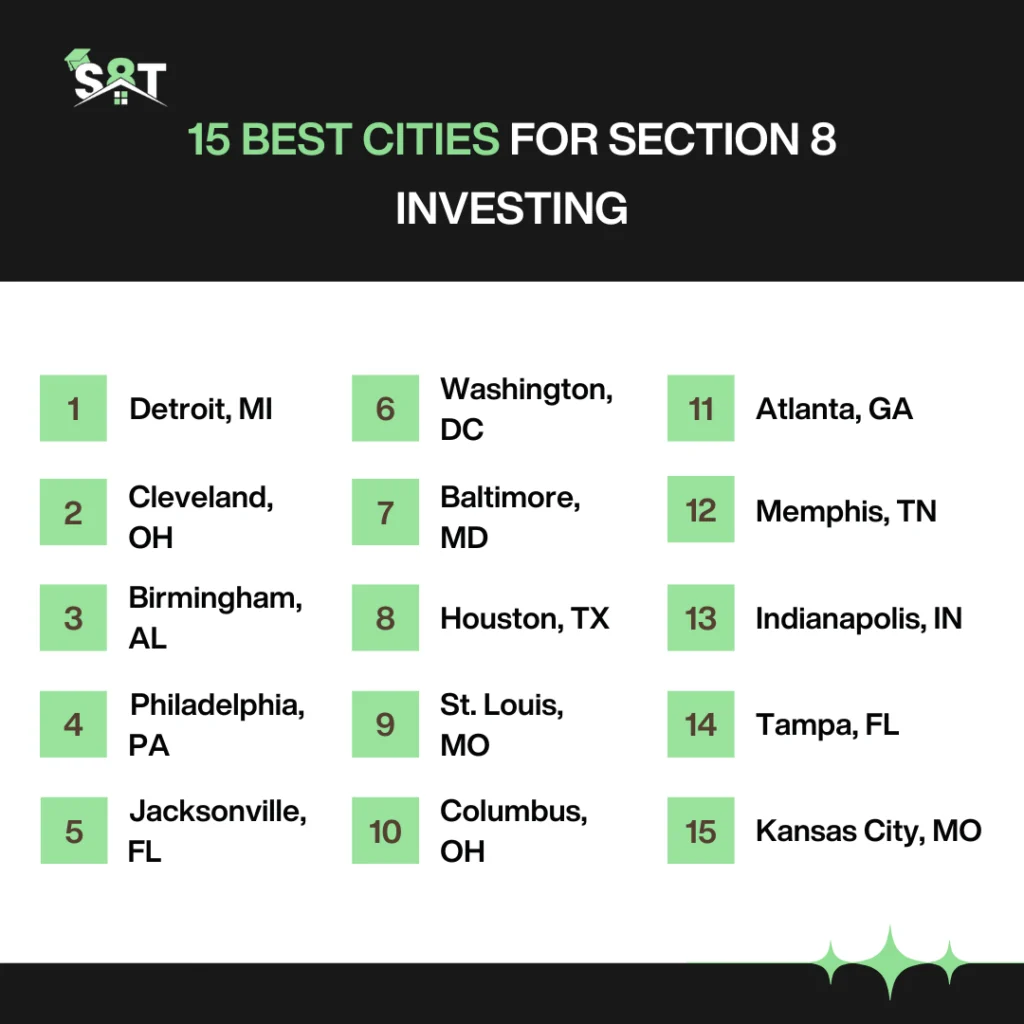
The 15 best cities for Section 8 investment are:

1. Detroit, MI

Detroit stands out for Section 8 investments, offering affordable housing and strong tenant demand. With an average home value of $76,340 and an average rent of $1,200, it’s an affordable market for Section 8 investors. Detroit’s population has been growing due to revitalization efforts, and its Price-to-Rent Ratio of 5.3 presents a great opportunity for stable rental income.

Property taxes in Detroit are relatively low, at around 2.4%, which helps keep investment costs down. However, the city faces challenges like high unemployment rates (9.80%) and crime (32.14 per 1,000 residents), which may affect tenant retention and property values. Despite these risks, the city’s consistent demand for affordable housing makes it a favorable market for Section 8 investors looking for long-term returns.

2. Cleveland, OH

Cleveland offers affordable real estate with a growing rental market, making it a strong candidate for Section 8 investments. With an average home value of $132,725 and an average rent of $1,150, Section 8 investors can acquire properties at low prices while ensuring steady rental income. The city’s population is stable, and the Price-to-Rent Ratio of 9.6 shows strong rental potential.

Cleveland’s property tax rate is about 2.64%, slightly higher than the national average (1.02%), which may impact profitability. While the city is undergoing revitalization, there are risks related to crime (35.64 per 1,000 residents) and economic instability. However, the city’s affordable housing demand and strong rental market make it a promising location for Section 8 investors looking for affordable entry points and stable returns.

3. Birmingham, AL

Birmingham is an attractive city for Section 8 investments, offering affordable real estate and a growing rental market. With an average home value of $132,725 and an average rent of $1,150, Birmingham provides investors with a low-cost entry point. The city’s economy is expanding, with a Price-to-Rent Ratio of 9.6, indicating strong rental potential.

Property taxes in Birmingham are relatively low at around 1.0%, which helps improve cash flow for Section 8 investors. The city’s population is growing, driven by job opportunities and a lower cost of living. However, some risks include fluctuations in demand due to economic shifts and limited appreciation in property values. Despite these factors, Birmingham’s strong rental demand and affordable prices make it a solid market for Section 8 investments.

4. Philadelphia, PA

Philadelphia offers a large rental market and strong tenant demand, making it a top city for Section 8 investments. With an average home value of $228,621 and an average rent of $1,600, Philadelphia presents an opportunity for Section 8 investors seeking steady rental income. The city’s population (1,573,916) is diverse, and its Price-to-Rent Ratio of 11.9 shows strong rental income potential.

Property taxes in Philadelphia are relatively high at about 1.39%, but the city’s economy and strategic location on the East Coast help offset these costs. Risks include higher property prices and potential oversaturation in certain neighborhoods. Nevertheless, Philadelphia’s large tenant base and stable rental demand make it a strong market for Section 8 investors.

5. Jacksonville, FL

Jacksonville is a growing city for Section 8 investments, driven by a strong economy and high demand for affordable housing. With an average home value of $280,096 and an average rent of $1,600, Jacksonville presents a promising opportunity for investors seeking long-term growth and reliable rental income. Its Price-to-Rent Ratio of 14.6 reflects solid rental potential.

The property tax rate in Jacksonville is 0.9%, one of the lowest in the nation, which enhances cash flow. The city’s population is steadily increasing due to its affordability and job opportunities, but risks include vulnerability to economic fluctuations and occasional hurricane damage. Despite this, Jacksonville’s growth and rental demand make it an ideal location for Section 8 investors.

6. Washington, DC

Washington, DC, offers a unique market for Section 8 investments, characterized by strong tenant demand and high rental prices. With an average home value of $572,823 and an average rent of $2,500, the city presents a higher entry cost, but with potential for high returns. Its Price-to-Rent Ratio of 19.1 reflects a competitive rental market.

Washington’s property tax rate is about 0.85%, which is relatively low given the high property values. The city’s population (702,250) is large and consistently growing due to its status as the nation’s capital. Risks include high property prices and the challenge of dealing with high turnover rates. Nevertheless, the city’s steady rental income and economic stability make it an attractive location for Section 8 investors.

7. Baltimore, MD

Baltimore offers an ideal market for Section 8 investments with affordable property prices and a diverse rental market. With an average home value of $186,123 and an average rent of $1,600, Baltimore presents a balanced investment opportunity. The city’s population (568,271) continues to grow, and its Price-to-Rent Ratio of 9.7 ensures strong rental income potential.

The property tax rate in Baltimore is about 2.248%, which is on the higher side, but the city’s stable economy and strong rental demand help mitigate this cost. Baltimore’s proximity to Washington, DC, enhances its market stability, but risks include fluctuations in property values and potential crime concerns. Despite these challenges, Baltimore remains an attractive market for Section 8 investors seeking reliable cash flow and long-term growth.

8. Houston, TX

Houston offers a thriving economy, strong population growth, and high demand for affordable housing, making it a prime location for Section 8 investments. With an average home value of $261,052 and an average rent of $1,900, Houston provides solid rental income potential. The city’s Price-to-Rent Ratio of 11.5 reflects a favorable market for investors.

Houston’s property tax rate is approximately 0.624%, which is lower than the national average, benefiting investors by supporting better cash flow. The city’s strong job market and affordable cost of living continue to drive consistent demand for Section 8 housing. While risks include exposure to fluctuations in oil prices and potential flooding from hurricanes, Houston’s economic growth and affordable housing market make it an excellent choice for Section 8 investors.

9. St. Louis, MO

St. Louis presents a favorable market for Section 8 investments, with affordable property prices and strong rental demand. With an average home value of $179,683 and an average rent of $1,210, St. Louis offers an affordable entry point for investors. The city’s stable population growth and Price-to-Rent Ratio of 12.4 ensure consistent rental income.

With a property tax rate of around 1.33%, St. Louis stands as a reasonable city for Section 8 investors looking to maximize cash flow. The city’s demand for affordable housing continues to rise, but risks include economic instability and crime in certain neighborhoods (4.817 per 1,000 residents). Despite these challenges, St. Louis remains an attractive market for Section 8 investors seeking long-term stability and reliable returns.

10. Columbus, OH

Columbus offers a strong market for Section 8 investments, with a growing population and a diverse rental market. With an average home value of $242,640 and an average rent of $1,495, Columbus presents a balanced opportunity for investors seeking rental income. The city’s expanding tech sector and steady job growth support high demand for affordable housing, reflected by a Price-to-Rent Ratio of 13.5.

The median effective property tax rate in Columbus is approximately 1.86%, which is manageable for Section 8 investors. The city’s population growth (2025 population: 933,263) and consistent rental demand make it an attractive market for Section 8 investments. Risks include potential oversupply in certain areas and the city’s reliance on industry growth. Nevertheless, Columbus remains a prime location for long-term, profitable investments.

11. Atlanta, GA

Atlanta is a top city for Section 8 investments, offering a growing population, thriving economy, and high demand for affordable housing. With an average home value of $384,900 and an average rent of $2,045, Atlanta provides investors with a lucrative market for high rental income. The city’s economic expansion, particularly in tech and logistics, drives demand for rental housing, with a Price-to-Rent Ratio of 15.7.

The property tax rate of Atlanta is 1.0%, making it favorable for Section 8 investors looking to maximize cash flow. The city’s population growth (520,070 at a 1.34% growth rate) and strong job market provide stability for Section 8 tenants, but risks include rising property prices and potential neighborhood gentrification. Despite these challenges, Atlanta’s economic growth and rental demand make it an attractive market for Section 8 investors.

12. Memphis, TN

Memphis offers an attractive market for Section 8 investments with affordable property prices and strong tenant demand. With an average home value of $143,363 and an average rent of $1,250, Memphis provides an affordable entry point for investors. The city’s population growth and stable demand for affordable housing reflect a Price-to-Rent Ratio of 11.4, ensuring strong rental income potential.

Memphis’ property tax rate is about 2.58%, which is reasonable for Section 8 investors. The city’s steady population growth and demand for affordable housing make it a prime location for Section 8 investments. Risks include occasional crime (65.28 per 1,000 residents) and economic instability, but these factors are mitigated by Memphis’s steady demand for affordable housing and government-backed rent payments.

13. Indianapolis, IN

Indianapolis offers strong opportunities for Section 8 investments, with steady population growth and a stable economy. With an average home value of $226,477 and an average rent of $1,494, Indianapolis provides a solid foundation for real estate investors. The city’s growing tech sector and business-friendly environment contribute to a strong demand for rental properties, reflected by a Price-to-Rent Ratio of 12.6.

Property taxes in Indianapolis are about 1.0%, which is favorable for Section 8 investors. The city’s consistent growth and demand for affordable housing make it an attractive location for Section 8 investments. Risks include potential market saturation in certain areas, but Indianapolis remains a prime city for long-term Section 8 investors seeking stable returns.

14. Tampa, FL

Tampa is an ideal city for Section 8 investments, with a strong economy, high population growth, and high demand for affordable housing. With an average home value of $368,151 and an average rent of $2,096, Tampa presents strong rental income potential. The city’s expanding job market, particularly in healthcare and finance, ensures steady demand for rental properties, reflected by a Price-to-Rent Ratio of 14.6.

What sets Tampa, located in Hillsborough County, apart is its median effective property tax rate of about 1.27%, which supports favorable cash flow for Section 8 investors. While the city’s growth and strong rental market provide stability, rising property values and potential market volatility are risks to consider. Still, Tampa’s growing economy and rental demand make it a prime location for Section 8 investments with long-term potential.

15. Kansas City

Kansas City offers a strong rental market with growing demand for affordable housing, making it an attractive city for Section 8 investments. With an average home value of $241,960 and an average rent of $1,350, it provides a cost-effective entry point for investors. The city’s diverse economy and population growth contribute to the demand for affordable housing, reflected in a Price-to-Rent Ratio of 12.4.

The property tax rate of 1.34% in Kansas City allows Section 8 investors to maintain a solid cash flow. While the city offers a stable rental market, potential risks such as economic fluctuations and changes in neighborhood dynamics should be considered. Nevertheless, Kansas City’s affordability and strong rental demand make it a promising option for Section 8 investors seeking long-term growth.

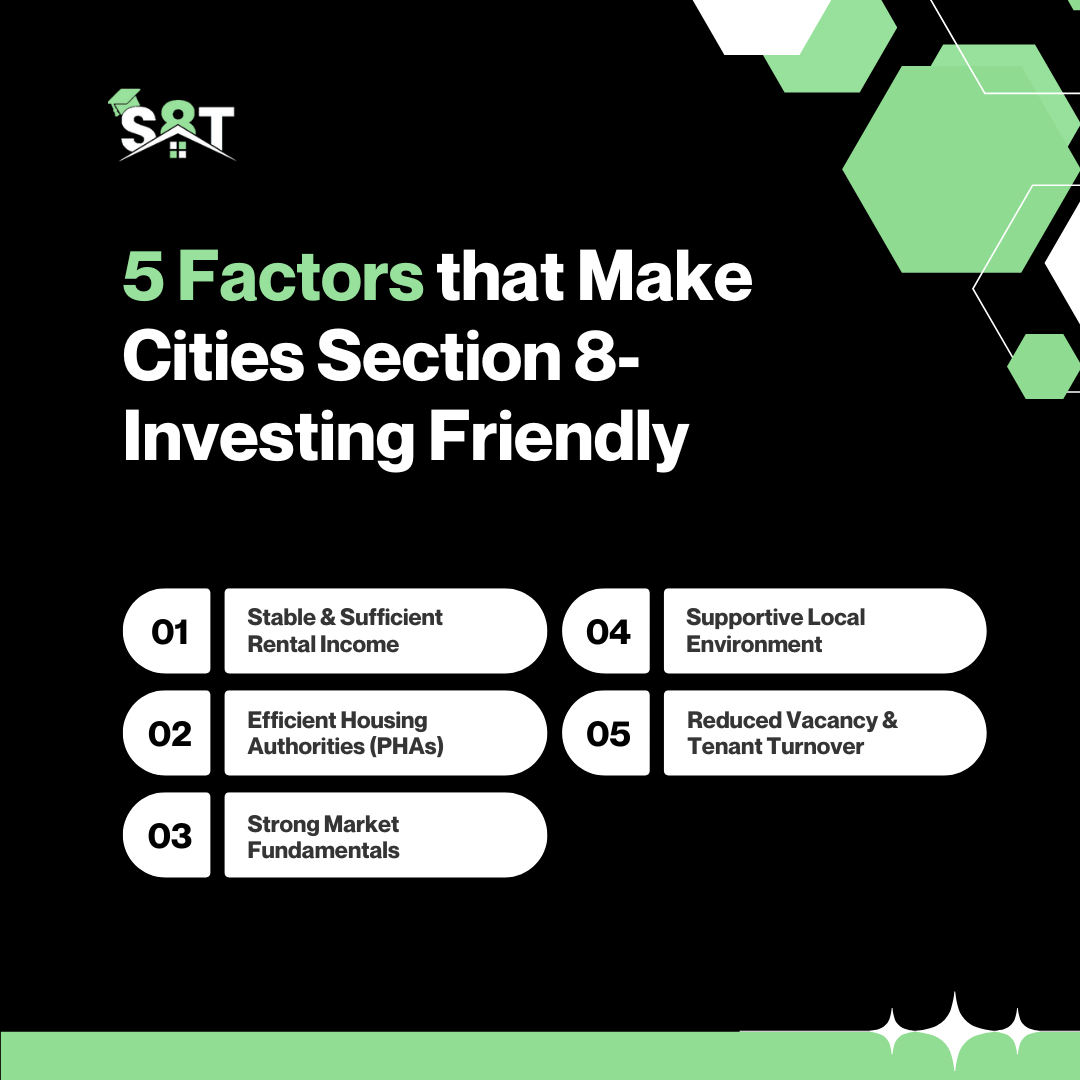
What are the Factors that Make Cities Section 8–Investing Friendly?

Factors that contribute to making a city suitable for Section 8 investment are stable rental income, efficient housing authorities, strong market fundamentals, a supportive local environment, and reduced vacancy rates. These factors directly impact your investment’s profitability, as they ensure steady cash flow, minimize risks, and long-term growth potential.

5 factors that make cities Section 8-investing friendly are:

1. Stable & Sufficient Rental Income

Look for cities where rental demand is high, and rents remain consistent over time. A strong rental income stream is crucial for Section 8 investors, as it ensures reliable cash flow from tenants who are backed by government subsidies, making the investment less vulnerable to economic downturns.

2. Efficient Housing Authorities (PHAs)

Select cities with well-organized PHAs that process applications quickly, maintain positive relationships with landlords, and ensure timely rent payments. Efficient PHAs reduce administrative hassles and improve the overall investment experience, ensuring smoother operations for property owners.

3. Strong Market Fundamentals

Cities with growing populations, a diverse economy, and stable employment opportunities tend to have high tenant demand for Section 8 housing, leading to consistent rent payments. A strong housing market ensures property values appreciate over time, offering both rental income and potential long-term capital gains.

4. Supportive Local Environment

Choose cities where local governments support affordable housing initiatives and implement landlord-friendly policies. Low regulation barriers, tax incentives, and a cooperative local government contribute to a healthy investment environment, allowing Section 8 investors to maximize returns with minimal friction.

5. Reduced Vacancy & Tenant Turnover

Cities with low vacancy rates and high tenant retention create a stable cash flow for Section 8 investors. Areas with a steady flow of income-qualified tenants and strong neighborhood stability are less likely to experience frequent turnover, helping to keep operational costs low and reducing risks of income gaps.

How to Choose the Right City for Your Section 8 Investment?

To choose the right city for Section 8 investment, focus on areas with stable rental income and strong demand for affordable housing. Cities with growing populations and diverse economies ensure consistent cash flow. Pay attention to the Price-to-Rent Ratio (PTR), as favorable PTR cities allow for affordable property acquisition and solid rental returns.

Equally important is selecting cities with efficient Housing Authorities (PHAs) for timely rent payments and smooth operations. Look for areas with low property taxes, landlord-friendly policies, and low vacancy rates to ensure steady cash flow. For proper guidance on these factors and to make informed decisions, taking a Section 8 training course can provide valuable insights and strategies. This training helps Section 8 investors navigate the complexities of the Section 8 program, maximizing returns and minimizing risks.

What are the Best States for Section 8 Investing?

Investing in Section 8 housing offers real estate investors a stable, government-backed income stream, providing an opportunity to build a reliable cash flow. By focusing on regions with high demand for affordable housing, investors can generate a consistent return on investment (ROI) while supporting communities in need of safe and affordable living options.

However, to truly maximize the potential of Section 8 investments, it is crucial to choose the right states where rental yields are high, property values are stable, and there is a consistent demand for affordable housing. States like Texas, Florida, and Tennessee are among the top contenders, each offering unique advantages for Section 8 landlords, but they also come with their own sets of challenges. Understanding these factors is key to making informed decisions and ensuring the long-term success of your investment strategy.

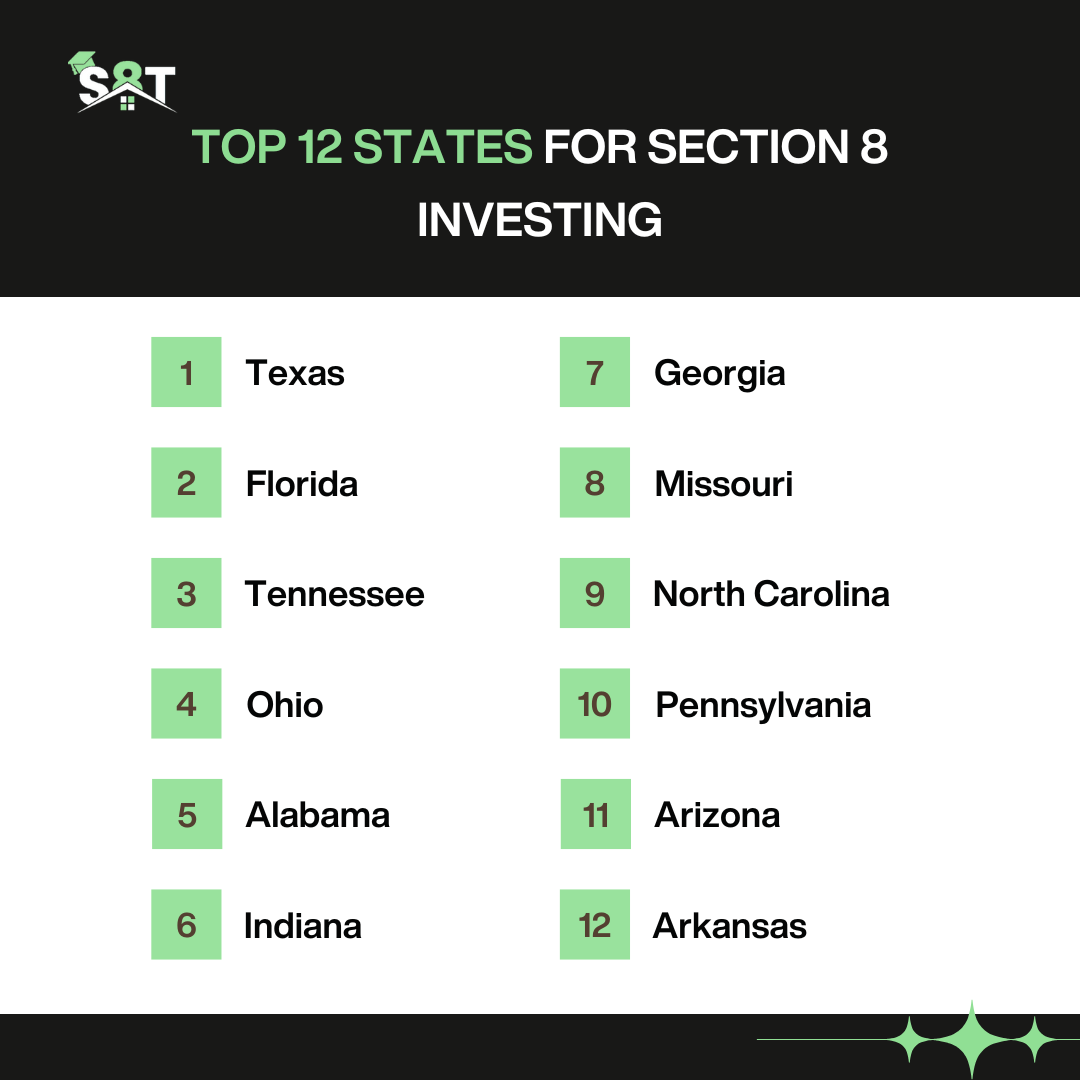
Top 12 states for Section 8 investing are as follows:

1. Texas

Texas is a strong contender for Section 8 investing, especially in cities like Houston, Dallas, and San Antonio, where the demand for affordable housing is consistently high. With a median rent of $1,875 and an average home value of $296,039, investors can expect a rental yield of 7.6% and a favorable price-to-rent ratio of 13.157. The state’s low vacancy rate (8.52) ensures steady rental income, though operating expenses such as property taxes (1.58%), maintenance, and insurance ($3,899) should be considered.

However, risks exist, particularly in coastal cities like Houston, which are prone to hurricane damage, leading to repair costs and potential property value depreciation. Additionally, rapidly expanding cities such as Austin and Dallas may experience market fluctuations as the population grows and the demand for housing changes. Despite these challenges, the diverse economy of Texas, driven by energy, technology, and healthcare industries, supports long-term stability in rental demand, making it one of the top states for Section 8 investment.

2. Florida

Florida is another top state for Section 8 investing, with high demand for affordable housing in cities like Miami, Orlando, and Tampa. The state offers a median rent of $2,332 and an average home value of $372,356, providing a strong rental yield of 7.5% and a price-to-rent ratio of 13.3. While annual operating expenses, such as property taxes (0.79%), maintenance, and insurance, can be higher in Florida, especially in coastal areas, the overall return on investment remains attractive due to the state’s strong rental market and steady demand for affordable housing.

Section 9 investors should, however, consider risks specific to Florida, including hurricane season, which can result in property damage and higher insurance costs ($5,838). Additionally, rapidly appreciating property values in certain cities may lead to potential market fluctuations. Despite these challenges, Florida’s growing economy, supported by tourism, real estate development, and healthcare industries, ensures strong long-term rental demand, making it a prime state for Section 8 investments.

3. Tennessee

Tennessee is a growing hub for Section 8 investing, particularly in cities like Nashville, Memphis, and Knoxville, where there is a consistent and increasing demand for affordable housing. The state offers a median rent of $1,695 and an average home value of $326,998, delivering a rental yield of 6% and a price-to-rent ratio of 16.07. While annual operating expenses, such as property taxes (0.55%), maintenance, and insurance ($2,672), remain reasonable, the state’s low vacancy rate (7.57%) further strengthens its appeal, ensuring consistent rental income for Section 8 investors.

That said, Section 8 investors should be mindful of certain risks, including economic fluctuations in smaller cities and property value volatility in fast-growing areas. However, Tennessee’s diverse economy, driven by industries like healthcare, entertainment, and manufacturing, continues to foster long-term demand for affordable rental housing, making it an attractive option for Section 8 investment.

4. Ohio

Ohio is a top state for Section 8 investing, especially in cities like Cleveland, Columbus, and Cincinnati, where the demand for affordable housing remains strong. The state boasts a median rent of $1,319 and an average home value of $236,963, resulting in a rental yield of 6.6% and a price-to-rent ratio of 14.9. Ohio’s relatively low annual operating expenses, including property taxes (1.36%) and maintenance costs, make it an affordable market for Section 8 investors, while its low vacancy rate (5.86%) helps ensure steady demand for rental properties.

Despite the strong returns, Section 8 investors should be aware of potential risks, including economic shifts in certain cities and the need for ongoing investment in older housing stock. However, Ohio’s stable economy, supported by industries such as manufacturing, healthcare, and education, continues to drive long-term demand for affordable rental housing, making it a solid choice for Section 8 investing.

5. Alabama

Alabama offers a promising market for Section 8 investing, especially in cities like Birmingham, Montgomery, and Huntsville, where affordable housing demand remains strong. The state has a median rent of $1,406 and an average home value of $231,050, which translates to a rental yield of 7% and a price-to-rent ratio of 13.7. Alabama’s annual operating expenses, including property taxes (0.38%), maintenance, and insurance ($3,114), are relatively low, making it an attractive option for Section 8 investors looking for strong returns with lower upfront costs. The state’s low vacancy rate (9.56%) further strengthens its appeal, ensuring consistent rental income.

However, Section 8 investors should consider risks such as economic dependence on certain industries and potential property value depreciation in more rural areas. Despite these risks, Alabama’s diverse economy, bolstered by automotive, aerospace, and technology sectors, supports long-term rental demand, making it a solid choice for Section 8 investment.

6. Indiana

Indiana is an attractive state for Section 8 investing, particularly in cities like Indianapolis, Fort Wayne, and Evansville, where demand for affordable housing is strong. The state offers a median rent of $1,400 and an average home value of $248,414, providing a rental yield of 6-7% and a price-to-rent ratio of 14.78. Indiana’s annual operating expenses, including property taxes (0.78%) and maintenance costs, are relatively low, making it an affordable market for Section 8 investors. Additionally, the state benefits from a steady vacancy rate (5.61%), ensuring a consistent demand for rental properties and reliable rental income.

While the market is promising, Section 8 investors should consider potential risks such as economic shifts in smaller cities and the possibility of property value fluctuations in certain regions. However, Indiana’s stable economy, driven by manufacturing, healthcare, and education sectors, ensures long-term demand for affordable rental housing, making it a strong choice for Section 8 investing.

7. Georgia

Georgia offers a robust market for Section 8 investing, particularly in cities like Atlanta, Savannah, and Augusta, where the demand for affordable housing remains high. The state has a median rent of $1,900 and an average home value of $328,216, yielding a rental yield of 7% and a price-to-rent ratio of 14.4. With relatively low annual operating expenses, including property taxes (0.81%), maintenance, and insurance ($2,041), Georgia provides an affordable market for Section 8 investors, while the state’s low vacancy rate (7.76%) ensures consistent rental income and reliable tenant demand.

Despite the strong prospects, Section 8 investors should be aware of risks such as rising property taxes in major urban centers like Atlanta (1.44% of the assessed property) and potential fluctuations in housing demand during economic downturns. However, Georgia’s growing economy, driven by sectors like film and entertainment, technology, and transportation, supports long-term rental demand, making it a favorable state for Section 8 investing.

8. Missouri

Missouri offers a stable market for Section 8 investing, with cities like St. Louis, Kansas City, and Columbia showing strong demand for affordable housing. The state has a median rent of $1,350 and an average home value of $255,937, delivering a rental yield of 6% and a price-to-rent ratio of 15.8. With relatively low annual operating expenses, including property taxes (0.88%) and maintenance, Missouri provides an affordable market for Section 8 investors. Additionally, its low vacancy rate (6.91%) ensures a steady stream of rental income.

Despite the favorable conditions, Section 8 investors should be mindful of risks such as economic fluctuations in certain areas and potential property value declines in underserved regions. However, Missouri’s diverse economy, driven by sectors like agriculture, healthcare, and manufacturing, continues to support stable long-term demand for affordable housing, making it a solid option for Section 8 investing.

9. North Carolina

North Carolina is an increasingly popular state for Section 8 investing, particularly in cities like Charlotte, Raleigh, and Durham, where there is strong demand for affordable housing. The state has a median rent of $1,795 and an average home value of $329,817, offering a rental yield of 6-6.5% and a price-to-rent ratio of 15.3. With reasonable annual operating expenses, including property taxes (0.70%) and maintenance, North Carolina provides a solid return on investment, while its relatively low vacancy rate (8.18%) ensures steady demand for rental properties.

Section 8 investors should consider potential risks, such as property tax fluctuations and market volatility in rapidly growing urban areas like Charlotte (sales tax rate of 7.25%). However, North Carolina’s diverse economy, driven by finance, technology, and education, supports long-term demand for affordable housing, making it a strong choice for Section 8 investment.

10. Pennsylvania

Pennsylvania offers a stable market for Section 8 investing, with cities like Philadelphia, Pittsburgh, and Allentown showing steady demand for affordable housing. The state has a median rent of $1,550 and an average home value of $277,535, yielding a rental yield of 6.5-7% and a price-to-rent ratio of 14.9. Pennsylvania’s relatively low annual operating expenses, including maintenance and insurance costs ($1,278), make it an attractive option for Section 8 investors, while its low vacancy rate (5.6%) ensures consistent rental income.

However, Section 8 investors should be aware of risks such as property taxes (1.35%) in larger cities and potential economic downturns in certain regions. Despite these risks, Pennsylvania’s diverse economy, driven by industries such as manufacturing, education, and healthcare, continues to support stable demand for affordable housing, making it a solid choice for Section 8 investment.

11. Arizona

Arizona offers strong investment opportunities for Section 8 landlords, particularly in cities like Phoenix, Tucson, and Mesa, where there is significant demand for affordable housing. The state has a median rent of $1,965 and an average home value of $417,884, delivering a rental yield of 5.5-6% and a price-to-rent ratio of 17.7. Despite higher home values, Arizona remains an attractive market for Section 8 investors due to its relatively low annual operating expenses, including property taxes (0.52%), maintenance, and insurance ($2,331), as well as its steady vacancy rate (7.74%), ensuring consistent rental income.

Section 8 investors should consider risks like potential property tax increases and market fluctuations in rapidly growing areas such as Phoenix. However, Arizona’s strong economy, driven by sectors like real estate, technology, and tourism, supports long-term rental demand, making it a favorable state for Section 8 investing.

12. Arkansas

Arkansas presents an appealing market for Section 8 investing, particularly in cities such as Little Rock, Fort Smith, and Fayetteville, where affordable housing demand is steadily growing. The state has a median rent of $1,400 and an average home value of $218,133, offering a rental yield of 7-8% and a price-to-rent ratio of 12.98. Arkansas stands out for its low annual operating expenses, including property taxes (0.57%), maintenance, and insurance ($3,287), which make it an attractive option for Section 8 investors. The state also benefits from a relatively low vacancy rate (5.84%), ensuring consistent demand for rental properties.

Investors should consider risks such as local economic shifts and fluctuations in property demand, particularly in smaller urban areas. However, Arkansas’s growing economy, supported by sectors like agriculture, manufacturing, and education, provides long-term stability in rental demand, making it a strong state for Section 8 investment.

What are the Factors that Make States Section 8–Investing Friendly?

States are Section 8 investment-friendly when they have efficient public housing authorities, a strong rental market, financial stability, and landlord-friendly laws, all of which enhance returns and minimize risks for investors. These factors create a stable environment, ensuring reliable income streams and long-term investment success.

5 factors that make states Section 8-investing friendly are:

1. Efficient Local Public Housing Authorities (PHAs)

Well-managed PHAs ensure that the Section 8 process is smooth and efficient, from tenant eligibility to timely rent payments. Investors benefit from reduced administrative burdens and a reliable payment schedule, which is crucial for steady cash flow and minimizing vacancy risk.

2. Strong Rental Market & Demand

A robust rental market with high demand for affordable housing ensures that Section 8 landlords can maintain consistent occupancy. In areas with high rental demand, properties are more likely to stay occupied, reducing the risk of prolonged vacancies that can significantly impact rental income.

3. Financial Stability & Incentives

States that offer economic stability and financial incentives, such as tax breaks or low property taxes, create a favorable environment for Section 8 investment. These factors not only reduce the cost of doing business but also attract more investors, further supporting rental demand and market stability.

4. Landlord-Friendly Laws

Investor-friendly laws are vital for Section 8 landlords, providing greater control over properties. Such laws ensure that landlords can efficiently manage evictions, enforce lease agreements, and navigate tenant disputes, ultimately reducing legal expenses and protecting the investment.

5. Reduced Capital Expenditure

States with affordable housing stock and lower maintenance costs enable investors to achieve higher returns. By investing in properties with lower initial costs and reduced ongoing maintenance, Section 8 landlords can maximize their rental yields and keep their expenses manageable.

How to Choose the Right State for Your Section 8 Investment?

To choose the right state for Section 8 investment, consider factors such as demand for affordable housing, price-to-rent ratio, stable job growth, low vacancy rates, and good cash flow. States with high rental demand, a stable economy, and strong job growth provide consistent occupancy and attractive rental yields, ensuring steady income for investors.

Additionally, evaluate landlord-friendly laws and property market trends. States with favorable laws make managing properties easier, while regions with appreciating property values provide long-term growth potential. To make well-informed decisions, Section 8 investors should also enroll in a Section 8 training course that offers in-depth guidance on evaluating local markets, understanding regulations, and selecting the best areas for Section 8 investments.

What is Section 8 Investing?

Section 8 investing refers to purchasing rental properties that participate in the Housing Choice Voucher (HCV) program, commonly known as Section 8, where tenants receive government assistance to help pay their rent. The program ensures guaranteed rental income for Section 8 landlords, with the government typically covering around 70% of the rent, reducing the risk of missed payments. This provides a steady cash flow for landlords while offering affordable housing options to low-income tenants.

To become an eligible Section 8 landlord, investors must ensure their properties meet Housing Quality Standards (HQS) set by the Public Housing Authority (PHA) and submit the required documentation. Landlords also need to sign Housing Assistance Payment (HAP) contracts with the PHA, ensuring they receive monthly payments directly from the government. Additionally, it is crucial to understand local PHA regulations, the Fair Market Rent (FMR) for the area, and how tenant eligibility is determined.

Successful Section 8 investing involves understanding best practices, such as tenant screening, maintaining consistent property standards, and ensuring regular inspections. Building strong relationships with the PHA and having a clear exit strategy are essential for long-term profitability, making Section 8 housing a stable and reliable investment option.

Why Should You Invest in Section 8 Housing?

Investing in Section 8 housing offers benefits like guaranteed rental income, low vacancy rates, long-term tenants, and potential tax advantages. The government covers around 70% of the tenant’s rent and utilities through housing vouchers, ensuring consistent payments via HAP contracts. Section 8 landlords and investors can also take advantage of tax incentives like the Low-Income Housing Tax Credit (LIHTC), and may qualify for funding or support through Housing Finance Authorities. These factors make Section 8 a reliable and attractive investment, particularly in areas with high demand for affordable housing.

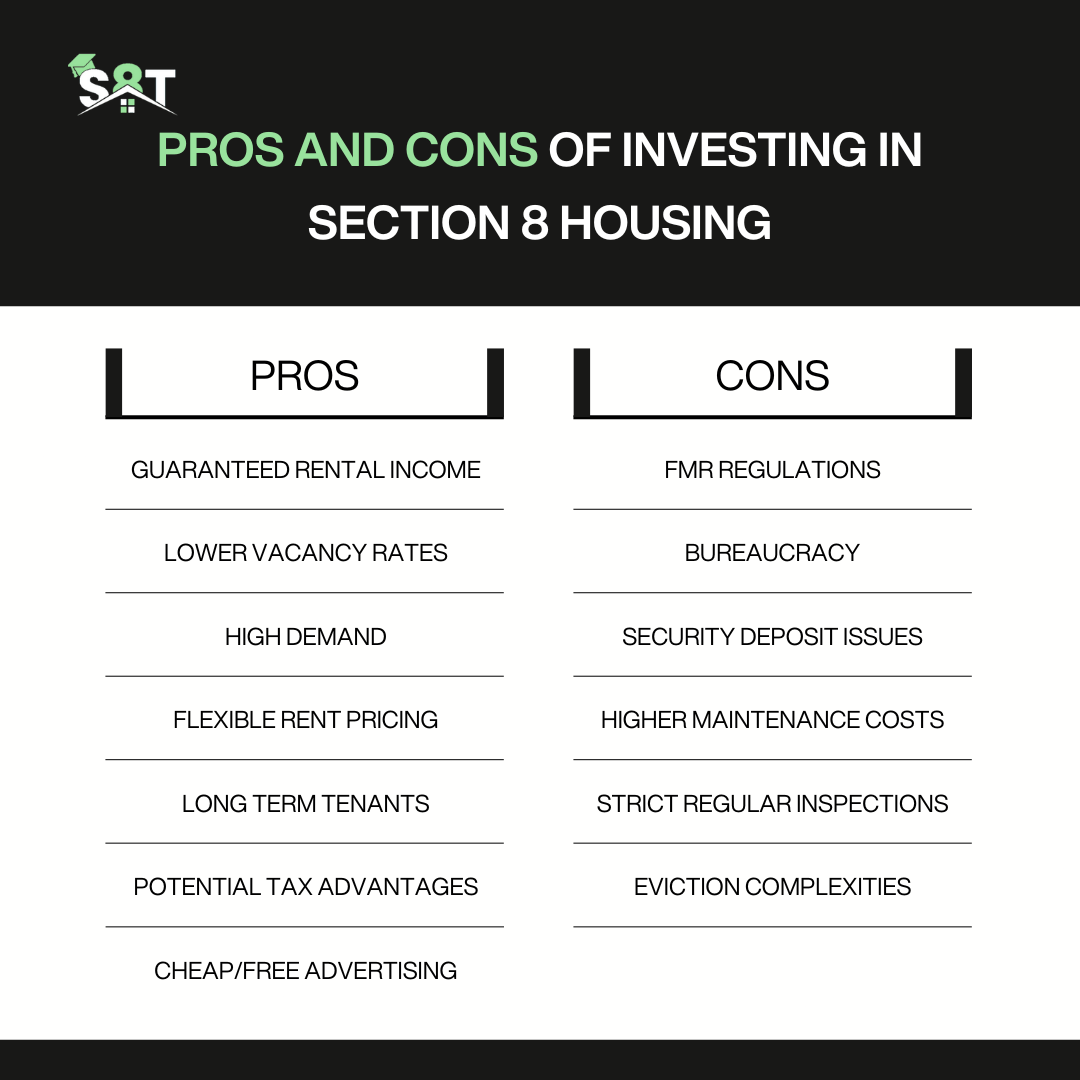
What are the Pros of Investing in Section 8 Housing?

Advantages of investing in Section 8 housing include stable rental income, reduced vacancy rates, and long-term lease terms. The government covers a portion of the rent through HCV, ensuring consistent payments via HAP contracts, which significantly improves cash flow stability and reduces financial risk. Beyond the financial benefits, Section 8 investments help meet the growing need for affordable housing, positively impacting communities by providing safe, stable living options for low-income families and contributing to the revitalization of D-class neighborhoods.

7 core benefits of investing in Section 8 housing are as follows:

1. Guaranteed Rental Income

One of the key benefits of investing in Section 8 is guaranteed rental income, with the government covering about 70% of rent and utilities through housing vouchers, ensuring regular payments. HAP contracts provide consistent cash flow, minimizing missed payments and offering stability compared to market-rate properties. This setup provides financial security, even during economic downturns or tenant instability.

2. Lower Vacancy Rates

Section 8 housing often leads to lower vacancy rates due to the high demand for affordable housing. Since the government guarantees a portion of the rent through housing vouchers, Section 8 landlords have access to a steady pool of tenant applicants, reducing the time a property sits vacant. Additionally, the program attracts long-term tenants, further minimizing turnover and ensuring more consistent occupancy.

3. High Demand

The demand for Section 8 housing remains consistently high, driven by the need for affordable rental options. Many low-income families rely on government housing vouchers, which makes these properties attractive to a steady pool of tenant applicants. This strong demand ensures Section 8 landlords can maintain high occupancy rates and reduce the risks associated with vacant properties.

4. Flexible Rent Pricing

Another advantage of Section 8 housing is the ability to set flexible rent prices within the limits of the Fair Market Rate (FMR). With the U.S. Department of HUD paying around 70% rent through HCV, Section 8 landlords can adjust rents based on local market conditions while maintaining affordability for tenants. This flexibility helps investors optimize their rental income while ensuring their properties remain accessible.

5. Long Term Tenants

With Section 8 housing, landlords often benefit from long-term tenants, as the program provides stable rental assistance through housing vouchers. The HUD’s contribution to rent makes tenants more likely to stay in their homes for extended periods, reducing turnover rates. This long-term stability minimizes the costs and time associated with finding new tenants, offering a more consistent cash flow for investors.

6. Potential Tax Advantages

Section 8 landlords may benefit from tax advantages such as the Low-Income Housing Tax Credit (LIHTC), which helps offset costs associated with maintaining affordable housing. Additionally, landlords can deduct operating expenses, such as property maintenance and management fees, increasing the financial efficiency of their investments while providing affordable housing options.

7. Cheap/Free Advertising

Properties listed under Section 8 enjoy built-in advertising through local Public Housing Authorities (PHA), which assist in matching landlords with eligible tenants. This often translates to cheap or free advertising, as PHAs post available units on government websites or community boards, eliminating the need for expensive marketing strategies.

What are the Cons of Investing in Section 8 Housing?

The downside of investing in Section 8 housing includes bureaucracy, strict adherence to Housing Quality Standards (HQS), and potential higher maintenance costs. Landlords must also deal with red tape, frequent property inspections, and the complexities of tenant management and evictions, which can be more challenging compared to market-rate rentals.

6 disadvantages that the new investors in Section 8 housing should know are:

1. FMR Regulations

Section 8 landlords are often limited by Fair Market Rate (FMR) regulations, which cap the rent they can charge based on the FMR for their area. While these regulations help keep housing affordable, they may reduce rental income, especially in high-demand areas where market rents are higher than the FMR. Landlords must adjust their pricing to comply with these limits to participate in the program.

2. Bureaucracy

Another drawback of Section 8 investing is the bureaucracy involved, as landlords must navigate complex government processes and paperwork. This includes submitting Request for Tenancy Approval (RFTA) forms, passing Housing Quality Standards (HQS) inspections, and ensuring compliance with various regulations. These administrative requirements can lead to delays and frustration, especially for those new to the program.

3. Security Deposit Issues

Because housing vouchers do not cover security deposits, Section 8 landlords often face difficulties when tenants lack the funds to pay the full deposit upfront. While the PHA covers about 70% of the rent, tenants are typically responsible for the entire security deposit, which can lead to delays in securing tenants if they cannot afford it. This lack of funds for the deposit can create cash flow challenges for Section 8 landlords, impacting the speed of property turnover.

4. Higher Maintenance Costs

Section 8 landlords often face higher maintenance costs due to the need to comply with the Housing Quality Standards (HQS) set by the PHA. These housing standards require properties to be regularly inspected and maintained in excellent condition, which can lead to increased repair and upkeep expenses. Older properties, or those in D-class neighborhoods, may require more frequent upgrades to meet these standards, adding to the overall maintenance burden.

5. Strict Regular Inspections

To qualify and maintain eligibility for Section 8, landlords must pass strict regular inspections conducted by the Public Housing Authority (PHA), typically once a year. If the property does not meet the Housing Quality Standards (HQS), landlords must make necessary repairs, or the PHA will stop providing the subsidy. This can cause delays in tenant turnover and may require landlords to refill the unit quickly, which could result in additional costs for maintenance or vacancy periods.

6. Eviction Complexities

There are eviction complexities for Section 8 landlords due to the legal protections provided to tenants under the Housing Choice Voucher (HCV) program. The eviction process is often more time-consuming, as landlords must follow procedures set by the PHA and ensure compliance with Fair Housing Act regulations. Tenants also have access to public-funded attorneys, which can delay the process and make it more difficult for landlords to regain control of the property.

What Are the Eligibility Criteria to Become a Section 8 Landlord?

To become an eligible Section 8 landlord, the property must meet Housing Quality Standards (HQS), the landlord must provide proper documentation, and comply with PHA regulations. A rent agreement must be in place, tenant screening must follow program rules, and the landlord must maintain the property.

6 main eligibility criteria for becoming a Section 8 landlord are as follows:

1. Property Standards

To qualify as a Section 8 landlord, the property must meet Housing Quality Standards (HQS), which ensure the unit is safe, sanitary, and in good repair. This includes meeting requirements for plumbing, heating, electrical systems, and overall structural integrity. Regular property inspections by the PHA ensure compliance with these housing standards.

2. Documentation

Section 8 landlords must provide proof of ownership, valid identification, and a completed Request for Tenancy Approval (RFTA) form to participate in the Section 8 program. These documents are submitted to the PHA for approval, ensuring that the property meets the program’s standards and the landlord is eligible to receive rental assistance payments.

3. Rent Agreement

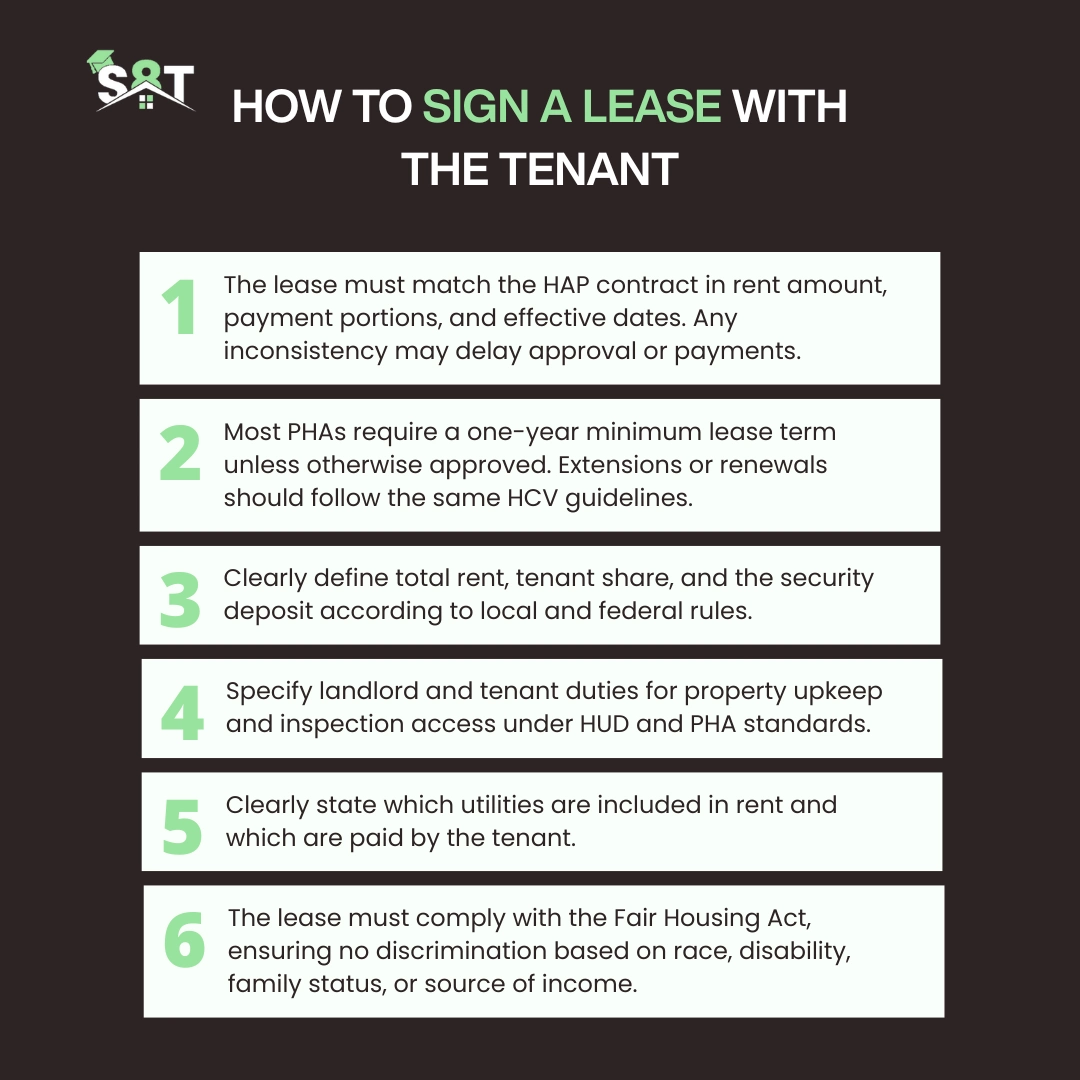
Section 8 landlords must create a valid rent agreement that outlines the lease terms, including rent amounts, payment methods, and tenant responsibilities. The agreement must comply with PHA regulations and confirm that the property meets housing standards. Both the landlord and tenant must agree to the terms, ensuring compliance with the Section 8 program.

4. Compliance

To participate in Section 8, landlords must ensure ongoing compliance with the rules set by the Public Housing Authority (PHA) and the Housing Choice Voucher (HCV) program. This includes following Housing Quality Standards (HQS), adhering to tenant screening guidelines, and maintaining the property in accordance with program requirements. Non-compliance can lead to the loss of eligibility for rental assistance or removal from the program.

5. Tenant Screening

Section 8 landlords must conduct tenant screening to ensure that tenants meet the eligibility requirements of the Housing Choice Voucher (HCV) program. This includes checking criminal background, verifying income, and confirming that the tenant holds valid housing vouchers. Effective screening ensures compliance with PHA regulations and helps maintain property standards.

6. Maintenance

For Section 8 landlords, maintenance is essential to ensure the property meets HQS set by the PHA. Landlords must maintain the property in good condition, including plumbing, electrical systems, and safety features, to pass regular property inspections. Failing to meet these standards can result in the loss of housing assistance payments (HAP) and removal from the program.

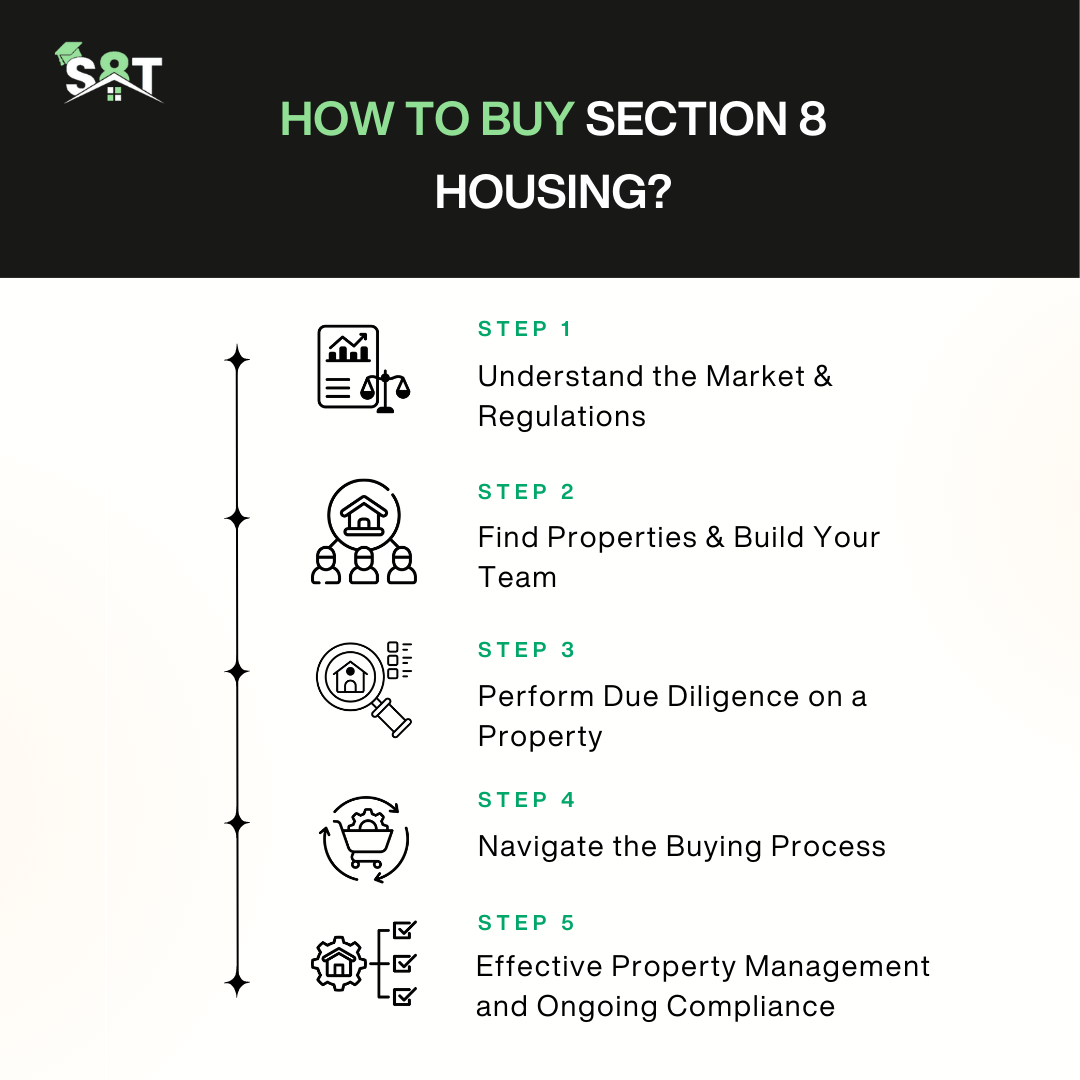
How to Buy Section 8 Housing?

To buy Section 8 housing, investors must understand the local real estate market, PHA regulations, and HCV system, find suitable properties, perform due diligence, navigate the buying process, and ensure ongoing compliance with HQS. Each step involves ensuring the property qualifies for Section 8 and is positioned for long-term success within the program. Careful planning and adherence to these steps will help investors maximize rental income and reduce potential risks.

Step 1: Understand the Market & Regulations

While buying Section 8 housing, investors must understand the local real estate market and the regulations specific to the Housing Choice Voucher (HCV) program. This includes familiarizing themselves with PHA regulations, Fair Market Rents (FMR), and HQS that the property must meet. Understanding tenant eligibility requirements and how housing vouchers work is also essential for ensuring that the property qualifies for the program and attracts reliable tenants.

Step 2: Find Properties & Build Your Team

The next step to buy Section 8 housing includes identifying properties that meet HQS and are located in areas with a high demand for affordable housing. Building a reliable team is crucial, including working with a real estate agent experienced with Section 8 properties, a property manager (PM) to handle ongoing maintenance and tenant relations, and a real estate attorney to assist with legalities and program compliance. Having a strong team in place will help ensure a smooth process and long-term success.

Step 3: Perform Due Diligence on a Property

Before purchasing Section 8 housing, investors must conduct detailed due diligence to ensure the property is eligible for the program and meets all Housing Quality Standards. This includes inspecting the property’s condition, identifying any required repairs or upgrades, and verifying compliance with PHA regulations. Investors should also assess the local market, tenant demand for affordable housing, and the financial potential of the property to ensure a profitable return on investment (ROI).

Step 4: Navigate the Buying Process

To buy Section 8 housing, investors must navigate the typical property purchasing process, which includes securing financing, making an offer, and completing necessary inspections. It is important to ensure that the property complies with HQS before finalizing the purchase. Additionally, investors should work closely with a real estate attorney to ensure all contracts and documentation comply with PHA regulations and other legal requirements related to Section 8.

Step 5: Effective Property Management and Ongoing Compliance

Effective property management is essential after purchasing Section 8 housing to maintain compliance with HQS and ensure continued eligibility for housing assistance payments (HAP). Landlords must conduct regular property inspections, address maintenance issues promptly, and manage tenant relationships in line with PHA regulations. Ongoing compliance ensures the property remains in good standing and continues generating steady rental income.

How to Become a Section 8 Landlord?

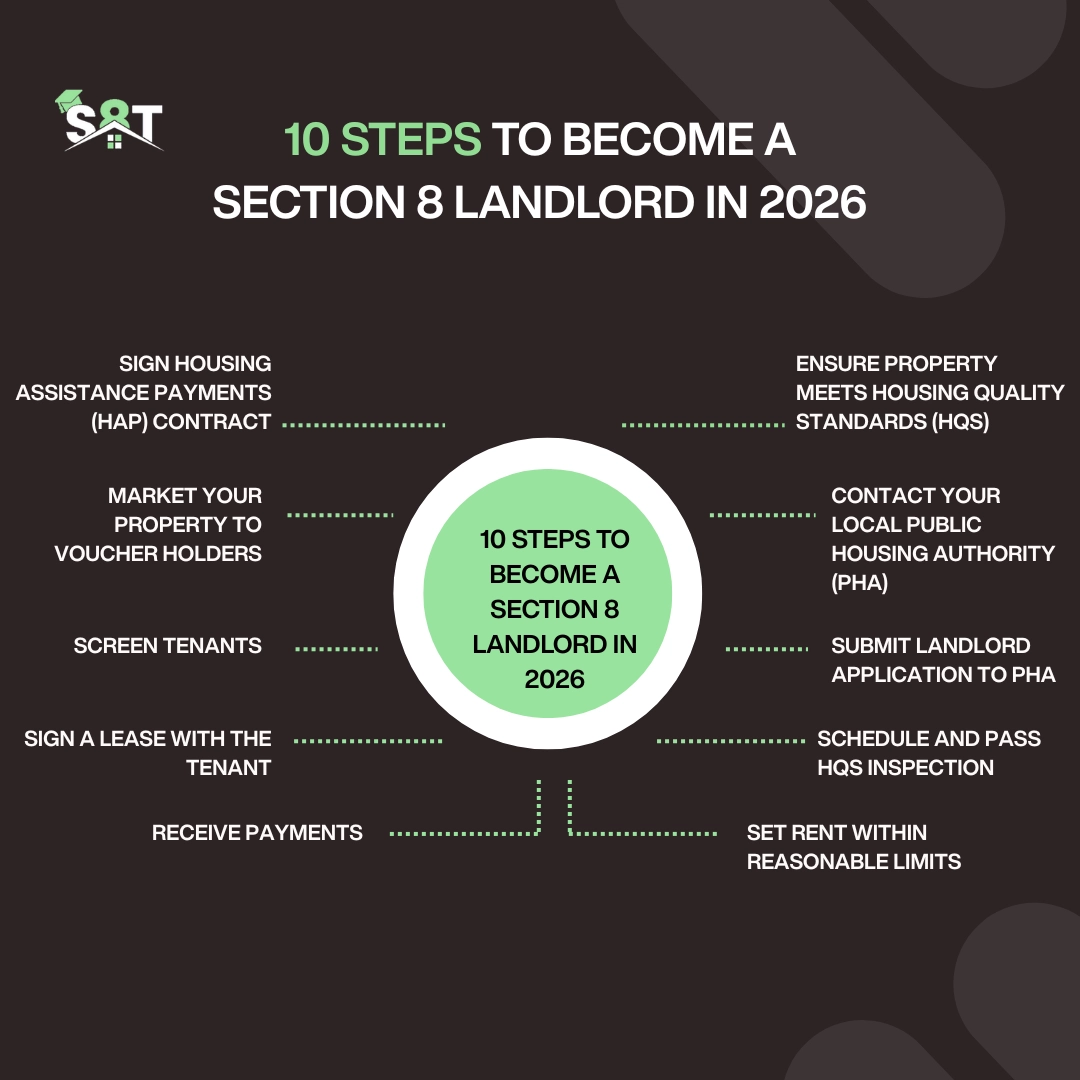
To become a Section 8 landlord, contact your local Public Housing Authority (PHA), submit required paperwork, ensure your property meets Housing Quality Standards (HQS), and market your property to eligible tenants. After your property passes inspection, you will market it to eligible tenants through the PHA’s listings and other local resources. Once you officially become a Section 8 landlord, you need to secure a tenant, sign contracts with the PHA, and begin receiving housing assistance payments (HAP) directly from the government.

Follow these 5 steps to become a Section 8 landlord:

1. Contact Your Local PHA

Becoming a Section 8 landlord starts with contacting your local PHA to get detailed information about the program in your area. This includes learning the eligibility criteria, HQS, and the property approval process. The PHA will guide you through the application process, explain the necessary documentation, and provide you with information on how the housing voucher system works in your local market.

2. Submit Required Paperwork

After contacting the local PHA, submit documents such as proof of property ownership, tax identification, and a completed Request for Tenancy Approval (RFTA) form to begin the process of becoming a Section 8 landlord. The PHA will review your submission, ensuring that your property meets Housing Quality Standards (HQS) and complies with local regulations before moving forward with approval.

3. Market Your Property

Once the PHA approves your paperwork, market your property to eligible Section 8 tenants in your area. The PHA often helps by listing available Section 8 units on their website or in local community resources. As a landlord, you can also advertise through local newspapers, online platforms, or community bulletin boards to reach tenants who qualify for housing vouchers. Effective marketing will help you attract reliable tenants and fill your property quickly.

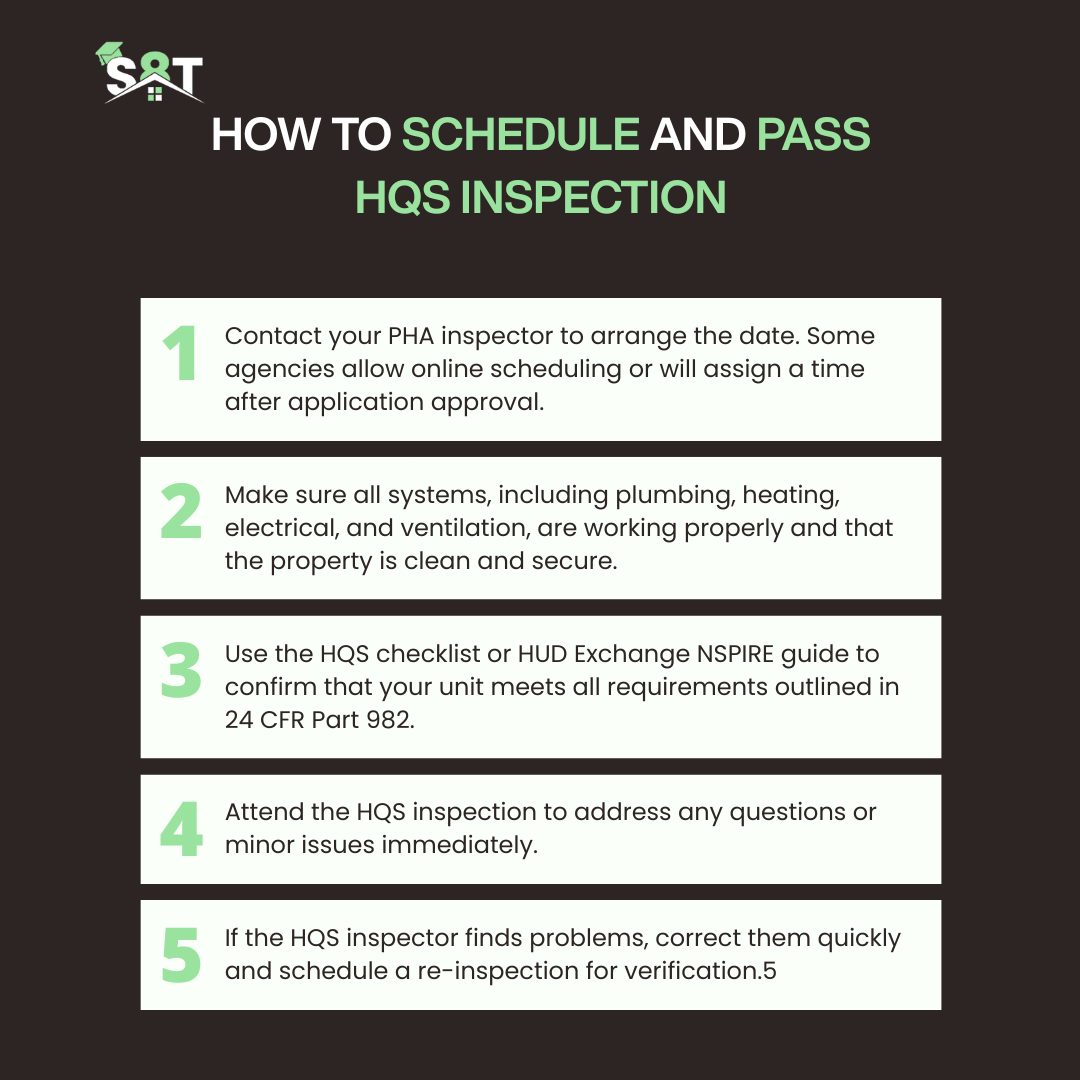
4. Pass Property Inspection

To become a Section 8 landlord, your property must pass a property inspection conducted by the PHA to ensure it meets HQS. The inspection will check the condition of essential systems, such as plumbing, electrical, and heating, as well as safety features such as smoke detectors and structural integrity. If any issues are found, you will need to address them before your property can be approved for Section 8 tenants.

5. Sign Contracts and Receive Payments

Once your property passes inspection, you will need to sign contracts with the PHA, including a HAP contract that outlines the rental terms and payment responsibilities. After signing the contract, the PHA will begin sending housing assistance payments (HAP) directly to you, covering about 70% of the rent paid by the U.S. government. You will also be responsible for collecting the tenant’s portion of the rent, as agreed in the lease agreement.

How Much Rent Does Section 8 Pay?

Section 8 typically covers around 70% of the rent, with the tenant responsible for the remaining 30% based on their income. The exact amount the government will pay depends on the tenant’s income, family size, and local Fair Market Rent (FMR) standards set by the Public Housing Authority (PHA).

Here is an example of how the rent payment works:

  • Fair Market Rent (FMR) for a two-bedroom apartment: $1,200
  • Government’s portion (HAP): $840 (around 70% of the rent)
  • Tenant’s portion: $360 (paid by the tenant)

Section 8 landlords receive HAP payments directly from the government, and the tenant’s portion of the rent is paid directly to the landlord by the tenant. Landlords must understand that PHAs have payment standards for each area, which determine the maximum amount the government will contribute toward rent. If the rent exceeds the FMR for the area, the landlord can either negotiate with the tenant or lower the rent to comply with program limits.

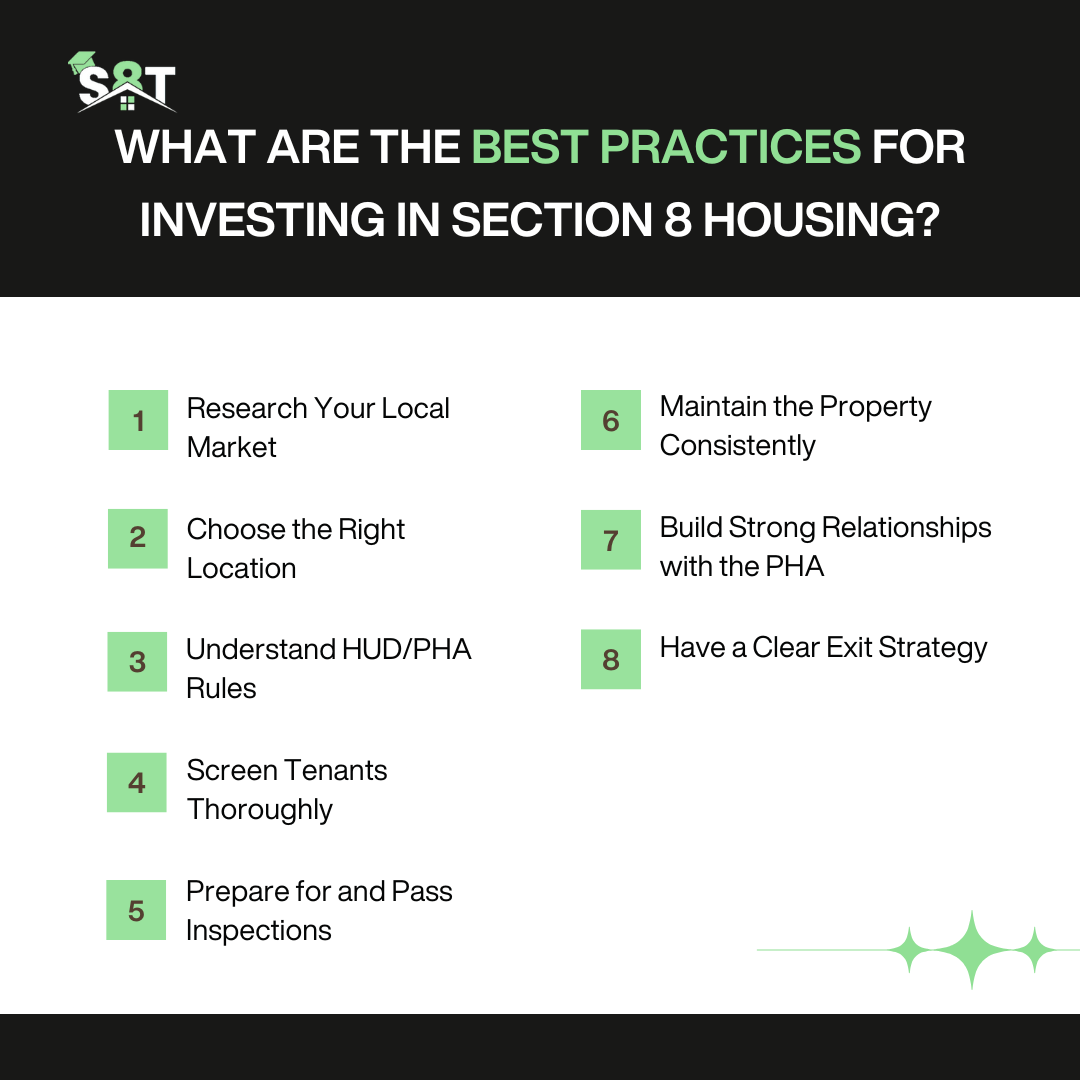
What Are the Best Practices for Investing in Section 8 Housing?

To succeed in Section 8 housing investing, landlords should research the local market, choose the right location, and fully understand HUD/PHA rules to ensure compliance. It is also important to screen tenants thoroughly, prepare for and pass inspections, and maintain the property consistently. Building strong relationships with the PHA and having a clear exit strategy will further contribute to long-term success.

Below are the 8 best industry practices to achieve success in Section 8 housing investment:

Research Your Local Market

When investing in Section 8 housing, you must understand the Fair Market Rent (FMR) in your area, as well as local tenant demographics and demand for affordable housing. Pay attention to factors like neighborhood stability, proximity to schools, public transportation, and crime rates. These insights will help you choose a high-demand location and ensure long-term success in rental income and tenant retention.

Choose the Right Location

Selecting the right location of Section 8 housing involves evaluating factors like tenant demand for affordable housing, access to public transportation, proximity to schools, grocery stores, and other essential amenities. Look for “opportunity areas” with stable economies, low crime rates, and high tenant retention rates, as these neighborhoods are more likely to offer steady rental income and long-term investment growth.

Understand HUD/PHA Rules

To succeed as a Section 8 landlord, you must understand the HUD regulations, PHA guidelines, and the Housing Quality Standards (HQS) rules, tenant eligibility, and tenant screening under the Housing Choice Voucher (HCV) program. This includes knowing the Fair Market Rent (FMR) limits, how the PHA determines tenant portions of rent, and your responsibilities for property inspections. Understanding these rules will help you stay compliant, avoid penalties, and ensure your property’s eligibility for HAP.

Screen Tenants Thoroughly

Section 8 landlords should conduct a thorough tenant screening to select eligible, reliable tenants. This includes checking for criminal background, verifying income to ensure the tenant meets PHA income guidelines, and confirming that the tenant holds a valid housing voucher. Landlords should also assess tenant rental history and ensure compliance with PHA tenant screening criteria to avoid issues and ensure long-term tenancy.

Prepare for and Pass Inspections

To ensure your property’s eligibility for Section 8, prepare for and pass regular inspections conducted by the PHA. These property inspections ensure that your property meets HQS, including safety, plumbing, electrical systems, and overall structural integrity. Proper maintenance, timely repairs, and keeping the property in good condition will help you pass inspections smoothly and avoid delays in rental assistance payments.

Maintain the Property Consistently

Consistent maintenance is crucial for Section 8 landlords to ensure the property continues to meet Housing Quality Standards and remains eligible for housing assistance payments. Regular inspections, timely repairs, and routine upkeep of plumbing, electrical, and safety systems will help avoid inspection failures and improve tenant satisfaction. A well-maintained property also ensures compliance with PHA regulations, reducing potential risks and increasing tenant retention.

Build Strong Relationships with the PHA

Establishing strong relationships with the PHA helps Section 8 landlords navigate the program efficiently. Regular communication with your PHA ensures the timely resolution of potential issues quickly, such as property inspections, tenant eligibility, and HAP. A positive working relationship ensures smoother interactions and keeps you informed of any updates or changes to HUD regulations or local policies.

Have a Clear Exit Strategy

Section 8 landlords should have a clear exit strategy to manage the long-term direction of their investment. Whether you plan to sell the property, transition to different real estate investments, or exit the Section 8 program, pre-planning helps you make informed decisions. A solid exit strategy ensures you understand the financial implications, comply with PHA regulations, and are prepared for tenant transitions or shifts in the housing market.

What are the Best States to Invest in Section 8 Housing?

The best states to invest in Section 8 housing include Texas, Florida, Tennessee, Ohio, Alabama, Indiana, Georgia, Missouri, North Carolina, Pennsylvania, and Arizona. A great demand for low-income tenants requiring affordable housing, relatively low property costs, and strong local PHA programs places them among the best states to invest in for Section 8.

Texas

Texas is a prime state for Section 8 investing, with cities like Houston, Dallas, and San Antonio offering a high demand for affordable housing. The median rent in Texas is approximately $1,875, with property prices averaging $296,039, making it a cost-effective choice for investors. The price-to-rent ratio is favorable, offering rental yields of about 7.6%. While Texas offers strong economic growth, investors should consider risks such as hurricane damage in coastal areas and potential market fluctuations in rapidly expanding cities.

Florida

Florida offers a strong market for Section 8 housing, especially in cities like Miami, Orlando, and Tampa. The median rent in Florida is about $2,332, and property prices average around $372,356, making it an attractive option for investors. With a price-to-rent ratio yielding around 7.5%, Florida provides solid rental returns. However, investors should be aware of risks like hurricane season and higher property insurance costs, particularly in coastal regions.

Tennessee

Tennessee is an excellent state for Section 8 investing, with cities like Nashville, Memphis, and Knoxville offering strong demand for affordable housing. The average rent in Tennessee is $1,695, and the average home value is $326,998, making it a reasonably priced market for investors. Tennessee also offers a favorable price-to-rent ratio, with rental yields around 6%. However, investors should be mindful of risks like economic fluctuations in certain cities and the potential for property value volatility in rapidly growing areas.

Ohio

Ohio presents a great opportunity for Section 8 investors, especially in cities like Cleveland, Columbus, and Cincinnati, where affordable housing demand is steady. The average rent in Ohio is $1,319, and the average home value is $236,963, making it an affordable market for investors. With a price-to-rent ratio offering rental yields around 6.6%, Ohio remains an attractive investment option. However, investors should consider risks such as economic shifts in certain areas and the need for investment in older housing stock.

Alabama

Alabama is an appealing state for Section 8 investments, especially in cities like Birmingham, Montgomery, and Huntsville. The average rent in Alabama is $1,406, and the average home value is $231,050, making it an affordable market for investors. With a favorable price-to-rent ratio yielding rental returns of around 7%, Alabama provides solid returns. However, investors should consider risks like economic dependence on certain industries and the potential for property depreciation in more rural regions.

Indiana

Indiana is an attractive state for Section 8 investors, with cities like Indianapolis, Fort Wayne, and Evansville showing strong demand for affordable housing. The average rent in Indiana is $1,400, and the average home value is $248,414, offering a reasonable entry point for investors. With a favorable price-to-rent ratio, rental yields typically range around 6-7%. Investors should be aware of potential risks like economic shifts in smaller cities and areas with fluctuating property values.

Georgia

Georgia offers a promising market for Section 8 investments, especially in cities like Atlanta, Savannah, and Augusta. The average rent in Georgia is $1,900, while the average home value is $328,216, making it an attractive market for investors looking for solid returns. With a price-to-rent ratio offering rental yields around 7%, Georgia provides good investment opportunities, though investors should consider risks like rising property taxes in major urban centers and the fluctuations in housing demand during economic downturns.

Missouri

Missouri presents a favorable market for Section 8 housing investments, especially in cities like St. Louis, Kansas City, and Columbia. The average rent in Missouri is $1,350, and the average home value is $255,937, offering a relatively affordable entry point for investors. With rental yields typically around 6% based on the price-to-rent ratio, Missouri offers stable returns, but investors should consider risks like economic fluctuations in certain areas and potential property value declines in underserved regions.

North Carolina

North Carolina is an attractive state for Section 8 investments, particularly in cities like Charlotte, Raleigh, and Durham. The average rent in NC is $1,795, and the average home value is $329,817, making it a moderately priced market for investors. With a price-to-rent ratio offering rental yields around 6-6.5%, North Carolina presents solid investment opportunities, though investors should keep in mind risks such as property tax fluctuations and potential market volatility in rapidly growing urban areas.

Pennsylvania

Pennsylvania offers a strong market for Section 8 investments, particularly in cities like Philadelphia, Pittsburgh, and Allentown. The average rent in Pennsylvania is $1,550, and the average home value is $277,535, making it an affordable market with good potential for rental income. The price-to-rent ratio offers rental yields around 6.5-7%, but investors should consider risks like property taxes in larger cities and potential economic downturns in some regions.

Arizona

Arizona offers a strong investment opportunity for Section 8 landlords, particularly in cities like Phoenix, Tucson, and Mesa. The average rent in Arizona is $1,965, and the average home value is $417,884, making it a higher-priced market for investors. Despite the higher home values, the price-to-rent ratio still offers reasonable rental yields around 5.5-6%. However, investors should be aware of potential risks like property tax increases and market fluctuations, especially in rapidly growing urban areas like Phoenix.

What are the Best Cities to Invest in Section 8 Housing?

The best cities for Section 8 investment include Detroit, Birmingham, Philadelphia, and Jacksonville, due to high demand for affordable housing and relatively low property costs. These cities are among the best cities to invest in Section 8 housing, providing strong rental markets, favorable price-to-rent ratios, and stable economies, making them ideal for investors looking for reliable rental income.

Detroit, MI

Detroit, MI, is a prime city for Section 8 investments, with strong demand for affordable housing. The average rent is about $1,200, and the average home value is $76,340. With a Price-to-Rent Ratio of approximately 5.3, Detroit presents a favorable environment for investors seeking rental income.

Birmingham, AL

Birmingham, AL, is an excellent city for Section 8 investments, with strong demand for affordable housing in a growing market. The average rent is around $1,150, and the average home value is $132,725. With a Price-to-Rent Ratio of approximately 9.6, Birmingham offers favorable conditions for investors looking to generate steady rental income.

Philadelphia, PA

Philadelphia, PA, is a strong city for Section 8 housing investments, with high demand for affordable housing and a large rental market. The average rent is about $1,600, and the average home value is $228,621. With a Price-to-Rent Ratio of approximately 11.9, Philadelphia presents a favorable rental market with attractive potential returns.

Jacksonville, FL

Jacksonville, FL, is an appealing city for Section 8 investments, with a growing rental market and strong demand for affordable housing. The average rent for a two-bedroom apartment is about $1,600, and the average home value is $280,096. With a Price-to-Rent Ratio of approximately 14.6, Jacksonville offers solid potential for rental income.

Washington, DC

Washington, DC, offers a strong market for Section 8 housing investments, particularly due to its steady demand for affordable housing in a major urban center. The average rent is about $2,500, and the average home value is $572,823. With a Price-to-Rent Ratio of approximately 19.1, Washington, DC presents a high-entry cost but also a potentially lucrative rental market.

Baltimore, MD

Baltimore, MD, is a strong city for Section 8 investments, offering a diverse rental market and consistent demand for affordable housing. The average rent is about $1,600, and the average home value is $186,123. With a Price-to-Rent Ratio of approximately 9.7, Baltimore presents an attractive opportunity for investors seeking solid rental returns.

Houston, TX

Houston, TX, offers a robust market for Section 8 investments, with a growing population and strong demand for affordable housing. The average rent is about $1,900, and the average home value is $261,052. With a Price-to-Rent Ratio of approximately 11.5, Houston provides an attractive rental market for investors.

St. Louis, MO

St. Louis, MO, is a promising city for Section 8 housing investments, offering affordable property prices and a steady demand for rental units. The average rent is about $1,210, and the average home value is $179,683. With a Price-to-Rent Ratio of approximately 12.4, St. Louis presents a favorable investment opportunity.

Columbus, OH

Columbus, OH, offers a strong market for Section 8 investments, with a growing population and a steady demand for affordable housing. The average rent is about $1,495, and the average home value is $242,640. With a Price-to-Rent Ratio of approximately 13.5, Columbus presents a favorable investment environment with potential for solid rental returns.

Atlanta, GA

Atlanta, GA, is a prime city for Section 8 housing investments, with a large population and strong demand for affordable housing. The average rent for an apartment is about $2,045, and the average home value is $384,900. With a Price-to-Rent Ratio of approximately 15.7, Atlanta offers attractive returns for investors.

How Does Section 8 Work for Landlords?

For landlords, Section 8 involves finding tenants, passing inspections, and receiving monthly payments from the government. This setup provides financial stability, as landlords receive guaranteed payments from the Public Housing Authority (PHA), reducing the risk of missed rent payments and ensuring steady cash flow.

Find a Tenant

Section 8 landlords must find eligible tenants who have housing vouchers from the Public Housing Authority (PHA). Advertising through local resources and the PHA’s listings can help attract qualified tenants.

Tenant Applies for Section 8

The tenant applies for Section 8 through their local PHA, which verifies their eligibility based on income, family size, and other criteria. The PHA then issues a housing voucher if the tenant qualifies.

Initial HQS Inspection

Once a tenant is selected, the PHA conducts an initial Housing Quality Standards (HQS) inspection to ensure the property meets the program’s safety and maintenance requirements. The property must pass this inspection to qualify for Section 8.

Rent Approval by the PHA

The PHA reviews the proposed rent and ensures it aligns with the Fair Market Rent (FMR) for the area. If the rent is deemed acceptable, the PHA approves the amount of housing assistance it will cover.

Sign Lease and HAP Contracts

The Section 8 landlord and tenant sign the lease agreement, and the landlord also signs a Housing Assistance Payment (HAP) contract with the PHA. This contract outlines the rent amount and payment responsibilities.

Receive Monthly Payments

Once the contracts are signed, the PHA begins sending monthly payments to the landlord for 70% of the rent covered by the government. The tenant is responsible for paying the remaining 30% of the rent.

How Does Section 8 Work for Tenants?

For tenants, Section 8 involves applying through the local PHA, receiving a voucher, finding a suitable housing unit, completing lease signing, and paying their portion of the rent. The PHA provides financial assistance by covering part of the rent, making housing more affordable, while tenants are responsible for paying the remaining portion based on their income.

Apply through your local PHA

Tenants must apply for Section 8 through their local Public Housing Authority (PHA), providing necessary documentation such as income verification, family size, and other eligibility criteria.

Receive a voucher once approved

Once approved, the PHA issues a housing voucher, which allows tenants to seek rental properties that participate in the Section 8 program.

Find a suitable housing unit

Tenants must find a suitable housing unit that meets Housing Quality Standards (HQS) and are willing to accept the housing voucher. The unit must pass an inspection by the PHA to qualify for the program.

Complete lease signing and pass the HQS inspection

After selecting a unit, tenants sign the lease with the landlord, and the PHA conducts a Housing Quality Standards (HQS) inspection to ensure the unit meets program requirements.

Pay your portion of the rent while the PHA pays the rest

Tenants are responsible for paying their portion of the rent, which is based on their income, while the PHA covers the remainder through housing assistance payments (HAP).

Is Section 8 Housing a Good Investment?

Yes, Section 8 housing can be a good investment due to the guaranteed rental income provided by the government through Housing Assistance Payments (HAP), which ensures stable cash flow for landlords. Additionally, Section 8 properties tend to attract long-term tenants, reducing vacancy rates and providing greater financial stability.

To succeed in Section 8 investing, landlords must understand the program’s requirements and regulations. Taking a Section 8 training course can equip investors with knowledge of Housing Quality Standards (HQS), tenant eligibility processes, and PHA regulations, all of which are crucial for navigating and maximizing returns in the Section 8 program.

10 Steps to Become a Section 8 Landlord in 2026

To become a Section 8 landlord, you must meet HUD housing standards, register with your local Public Housing Agency (PHA), and qualify under the Housing Choice Voucher (HCV) Program to receive Housing Assistance Payments (HAP). This federally supported system provides consistent, on-time rent backed by the U.S. Department of Housing and Urban Development (HUD) and helps landlords maintain stable, long-term tenancies.

The Section 8 program, established under the Housing Act of 1937, allows landlords to rent to eligible low-income families using federally funded rental subsidies. Local PHAs manage inspections, payments, and tenant approvals, while landlords maintain properties that meet Housing Quality Standards (HQS) and HUD’s NSPIRE inspection model.

Participation in the program ensures steady income and supports affordable housing, while landlords who follow HUD regulations and maintain property standards build credibility and long-term profitability.

Follow these 10 steps to become a Section 8 landlord and confidently prepare your property for the 2026 HUD compliance framework.

  1. Ensure Property Meets Housing Quality Standards (HQS)
  2. Contact Your Local Public Housing Authority (PHA)
  3. Submit Landlord Application to PHA
  4. Schedule and Pass HQS Inspection
  5. Set Rent Within Reasonable Limits
  6. Sign Housing Assistance Payments (HAP) Contract
  7. Market Your Property to Voucher Holders
  8. Screen Tenants
  9. Sign a Lease with the Tenant
  10. Receive Payments

Step 1: Ensure Property Meets Housing Quality Standards (HQS)

Before your property can be approved for the Section 8 Housing Choice Voucher (HCV) Program, it must meet the Housing Quality Standards (HQS) set by the HUD and verified by your local PHA. These standards ensure that all rental units are safe, sanitary, and decent for low-income tenants.

Each rental property must comply with the following HQS criteria:

  • Stable roof, foundation, and flooring without leaks or damage.
  • Proper plumbing, safe electrical wiring, and working heating systems.
  • Sanitary kitchens, bathrooms, and adequate waste disposal.
  • Working smoke detectors, secure windows, and doors with functioning locks.
  • No molds, pests, or lead-based paint hazards.
  • Sufficient natural or artificial light and airflow in all rooms.

In 2026, HUD’s NSPIRE standards (National Standards for the Physical Inspection of Real Estate) will replace traditional HQS with updated safety and maintenance rules. Under 24 CFR Part 982, PHAs will conduct initial and annual inspections to verify compliance. Landlords must fix any issues before HAPs can continue.

Common failures include plumbing leaks, broken locks, and exposed wiring. Conducting a quick self-inspection and using HUD Exchange checklists or property management software helps landlords stay prepared. Keeping your property HQS-compliant ensures eligibility, uninterrupted HAPs, and long-term rental stability.

Step 2: Contact Your Local Public Housing Authority (PHA)

Once your property meets HUD housing standards, the next step is to contact your local PHA to begin the registration and approval process for the HCV Program. Each PHA operates under HUD’s federal guidelines but manages its own landlord enrollment, inspections, and payments locally.

Follow these 5 steps to contact your local PHA:

  1. Visit the HUD Exchange directory or official HUD website to locate your area’s housing authority.
  2. Confirm local Section 8 requirements, current Fair Market Rent (FMR) limits, and any landlord incentive programs.
  3. Obtain the rental packet or Section 8 welcome packet, which includes the Request for Tenancy Approval (RFTA) and key landlord forms.
  4. Confirm how HQS or NSPIRE inspections are scheduled under 24 CFR Part 982 (eCFR) and confirm expected timelines for approval.
  5. Save all emails and forms for quick reference during the approval process.

Each PHA follows slightly different local rules or payment processes, so maintaining clear and regular communication helps move your application forward smoothly. Many landlords keep a dedicated folder or digital file to store PHA correspondence, inspection results, and payment details.

Clear and consistent communication with your PHA ensures faster listing approval, clear inspection scheduling, and on-time HAP once your property is approved for the Section 8 program.

Step 3: Submit Landlord Application to PHA

After contacting your local PHA, the next step is to submit a landlord application to officially participate in the Housing Choice Voucher (HCV) Program. This application confirms your eligibility and allows the PHA to review your property for inclusion in the Section 8 housing system.

Follow these 5 steps to complete your landlord application:

  1. Request the official landlord packet from your PHA, which includes the Request for Tenancy Approval (RFTA) and landlord registration forms.
  2. List the property address, number of units, and ownership information accurately.
  3. Submit proof of ownership, a valid photo ID, an IRS W-9 form, and deposit information for electronic HAP.
  4. Deliver the application through the PHA’s online portal, by mail, or in person, as directed by local policy.
  5. The PHA reviews your submission and notifies you of the next step once your documents are verified.

Keep copies of all submitted forms and confirmation receipts. Accurate, organized documentation speeds up the approval process and ensures your property is ready for the HQS or NSPIRE inspection phase.

Step 4: Schedule and Pass HQS Inspection

Once your landlord application is approved, the Public Housing Agency (PHA) will schedule a Housing Quality Standards (HQS) inspection to verify that your property meets all HUD safety and maintenance requirements. This step ensures the unit is safe, sanitary, and ready for tenants under the HCV Program.

You can follow these 5 steps to schedule and pass the HQS inspection:

  1. Contact your PHA inspector to arrange the date. Some agencies allow online scheduling or will assign a time after application approval.
  2. Make sure all systems, including plumbing, heating, electrical, and ventilation, are working properly and that the property is clean and secure.
  3. Use the HQS checklist or HUD Exchange NSPIRE guide to confirm that your unit meets all requirements outlined in 24 CFR Part 982.
  4. Attend the HQS inspection to address any questions or minor issues immediately.
  5. If the HQS inspector finds problems, correct them quickly and schedule a re-inspection for verification.

Common HQS failures include missing smoke detectors, broken locks, exposed wiring, and plumbing leaks. Conducting a self-inspection beforehand helps prevent delays and failed reports. Maintaining compliance ensures the unit remains eligible for HAP and avoids interruption of rent disbursements.

Step 5: Set Rent Within Reasonable Limits

After your property passes inspection, you must set the rent that complies with HUD’s Fair Market Rent (FMR) guidelines and PHA rent reasonableness policies. This ensures the rental amount is fair, competitive, and consistent with local market conditions under the HCV Program.

5 steps to set a compliant rent amount on your Section 8 property:

  1. Check your local PHA’s Fair Market Rent (FMR) chart published by HUD to understand the maximum allowable rent for your property size and location.
  2. Research similar unassisted rental units in your area to make sure your price aligns with the current market.
  3. Clarify whether utilities such as water, gas, or trash collection are included in the rent or paid separately by tenants.
  4. Provide your requested rent amount to the PHA for approval as part of the RFTA process.
  5. If the rent exceeds local limits, the PHA will request a revision before approving the lease.

Setting Section 8 rent within reasonable limits ensures compliance and speeds up the lease approval process. Keeping your rental price consistent with HUD’s rent reasonableness standards helps secure qualified tenants and ensures ongoing eligibility for Housing Assistance Payments (HAP) without interruptions.

Step 6: Sign Housing Assistance Payments (HAP) Contract

Once the Public Housing Agency (PHA) approves your rent and tenant application, you must sign the Housing Assistance Payments (HAP) contract. This contract formalizes your participation in the Housing Choice Voucher (HCV) Program and establishes the payment terms between you, the PHA, and the tenant.

5 steps to sign the HAP contract and enroll successfully in the Section 8 program:

  1. Read all sections carefully, including payment amounts, term length, and responsibilities for both landlord and tenant.
  2. Verify that your deposit information and IRS W-9 form are up to date to receive electronic Housing Assistance Payments (HAP) without delay.
  3. Agree to maintain HUD housing standards and allow annual HQS or NSPIRE inspections as required under 24 CFR Part 982.
  4. Ensure the tenant understands their rent portion and lease obligations under the HCV Program.
  5. Both the landlord and PHA must sign the contract before payments begin. Keep a copy for your records.

The HAP contract guarantees timely, taxpayer-funded payments directly from the PHA to the landlord. Staying compliant with all terms helps ensure steady income, positive tenant relationships, and uninterrupted participation in the Section 8 program.

Step 7: Market Your Property to Voucher Holders

After signing the Housing Assistance Payments (HAP) contract, you can begin marketing your property to qualified Section 8 voucher holders. Reaching the right audience ensures faster tenant placement and keeps your unit occupied under the HCV Program.

5 steps required for effective marketing of your property to HCV holders are:

  1. Contact your local Public Housing Agency (PHA) to add your unit to its official Section 8 listings. Many PHAs maintain online databases or bulletin boards for available rentals.
  2. Use major rental platforms like Zillow, Apartments.com, and local listing services, clearly stating that the property accepts Section 8 vouchers.
  3. Add clear photos, rent amount, included utilities, and compliance features such as recent NSPIRE or HQS inspection approval.
  4. Utilize digital listing platforms or property management software to organize applications, schedule showings, and track tenant inquiries efficiently.
  5. Mention that rent payments are backed by HUD and issued by the PHA, offering guaranteed, on-time payments.

Strong marketing builds visibility, attracts reliable tenants, and reduces vacancy time. A clear, accurate listing shows professionalism to both the PHA and voucher holders. By communicating promptly and maintaining HUD housing standards, landlords build trust, improve tenant retention, and sustain long-term rental profitability.

Step 8: Screen Tenants

Landlords in the Housing Choice Voucher (HCV) Program must carefully screen potential tenants to ensure reliability and lease compliance. While the PHA verifies a tenant’s Section 8 eligibility, landlords are responsible for evaluating suitability for their property. Proper screening protects your investment, ensures HUD compliance, and supports stable tenancy.

6 core steps to screen Section 8 tenants include:

  1. Request a copy of the tenant’s Section 8 voucher or written confirmation from the PHA verifying their program participation and payment portion.
  2. Contact previous landlords to check payment consistency, property care, and adherence to lease terms.
  3. Review criminal, eviction, and credit reports, ensuring your process follows the Fair Housing Act and PHA screening standards.
  4. Evaluate pay stubs or employment letters to confirm the tenant’s rent contribution and income source.
  5. Discuss expectations, property rules, and responsibilities under the HCV Program.
  6. Maintain written records of your tenant screening process to ensure transparency and legal compliance.

Strong tenant screening practices help identify responsible tenants who maintain the property and pay rent on time. Applying consistent, fair criteria ensures compliance with HUD guidelines and builds a reliable foundation for long-term success in the Section 8 program.

Step 9: Sign a Lease with the Tenant

After the PHA approves your tenant, sign a lease agreement that complies with HUD and HCV Program requirements. The lease outlines rental terms, payment responsibilities, and property maintenance obligations for both parties. It must align with the HAP contract signed with the PHA.

6 main things to consider before signing the tenant lease include:

  1. The lease must match the HAP contract in rent amount, payment portions, and effective dates. Any inconsistency may delay approval or payments.
  2. Most PHAs require a one-year minimum lease term unless otherwise approved. Extensions or renewals should follow the same HCV guidelines.
  3. Clearly define total rent, tenant share, and the security deposit according to local and federal rules.
  4. Specify landlord and tenant duties for property upkeep and inspection access under HUD and PHA standards.
  5. Clearly state which utilities are included in rent and which are paid by the tenant.
  6. The lease must comply with the Fair Housing Act, ensuring no discrimination based on race, disability, family status, or source of income.

A clear, compliant lease protects both parties and ensures the unit remains eligible for Housing Assistance Payments (HAP). Documenting terms in writing builds transparency, minimizes misunderstandings, and supports long-term success in the Section 8 program.

Step 10: Receive Payments

Under the Housing Choice Voucher (HCV) Program, landlords receive rent in two parts. One portion is paid by the Public Housing Agency (PHA) through Housing Assistance Payments (HAP), and the other comes directly from the tenant. The HAP portion is federally funded and guaranteed by the U.S. Department of Housing and Urban Development (HUD). This payment structure provides stability, timely rent, and lower financial risk for landlords.

Most PHAs use direct deposit for HAP payments, so landlords must keep their IRS W-9 form and bank information current to prevent delays. The tenant’s portion is paid directly to the landlord, usually monthly. Keeping accurate records of both PHA and tenant payments ensures compliance with HUD and PHA financial reporting requirements.

Many landlords rely on property management software or PHA online portals to track deposits, review payment statements, and verify income. If delays or errors occur, contacting the PHA promptly helps resolve them quickly. Maintaining organized records and clear communication supports consistent income and long-term success in the Section 8 program.

Ready to Invest in Section 8 Housing?

Investing in Section 8 housing offers landlords stable income and reliable tenants through the Housing Choice Voucher (HCV) Program. Rent payments are backed by HUD and processed by Public Housing Agencies (PHAs), ensuring predictable cash flow and lower financial risk. By keeping properties HUD-compliant and meeting inspection requirements, landlords can earn a steady income while supporting affordable housing in their communities.

With HUD’s NSPIRE standards and updated Housing Quality Standards (HQS) taking effect in 2026, this is the ideal time to prepare your property for participation in Section 8 Housing. A compliant, well-managed unit not only supports community housing goals but also enhances your credibility with PHAs and strengthens long-term profitability. For new landlords, completing a Section 8 training course can help you understand regulations, prepare for inspections, and confidently manage the program’s requirements for lasting success.